Can You Pour Concrete in Winter in Washington? (Rain and Temperature Rules)
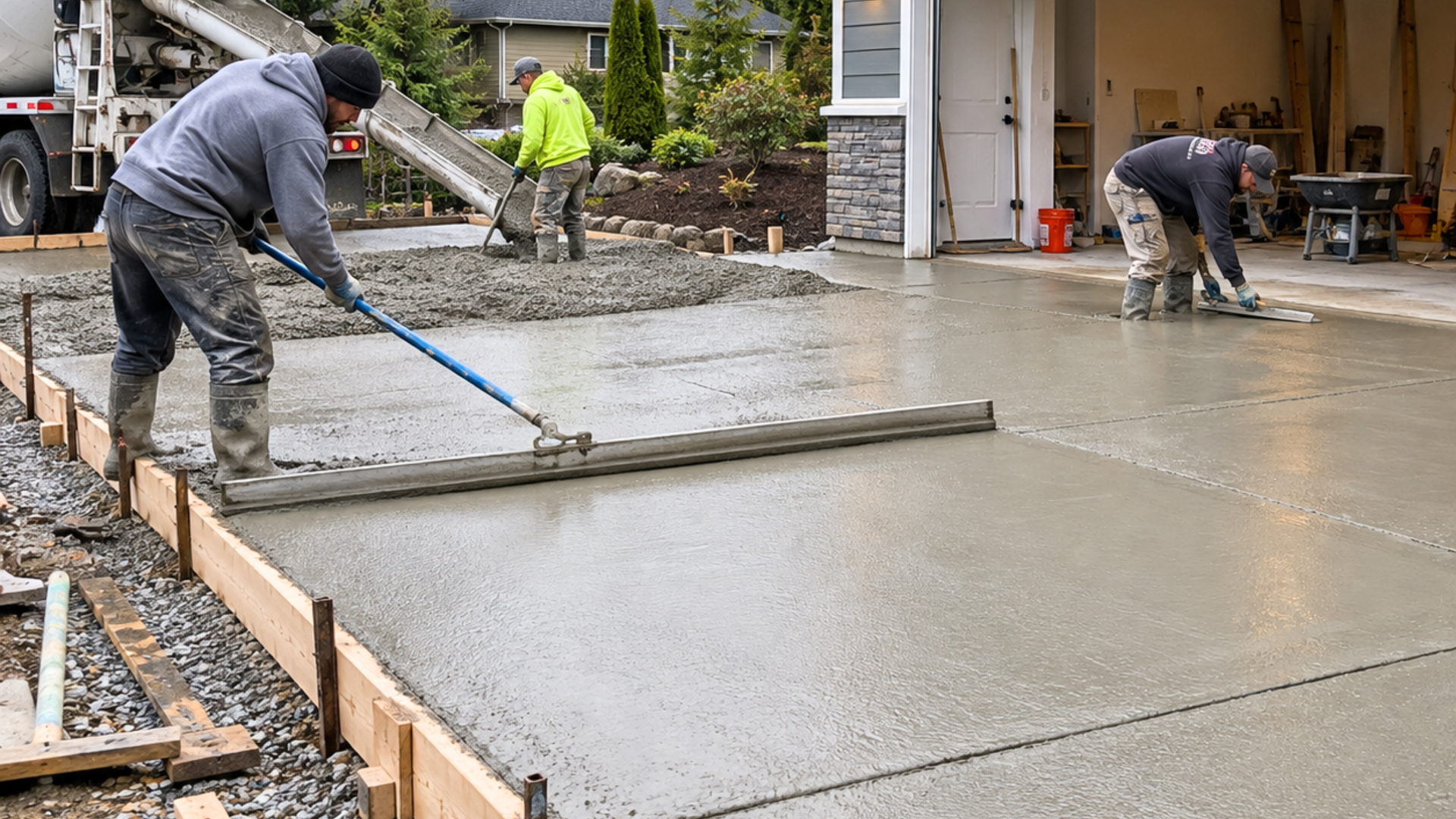
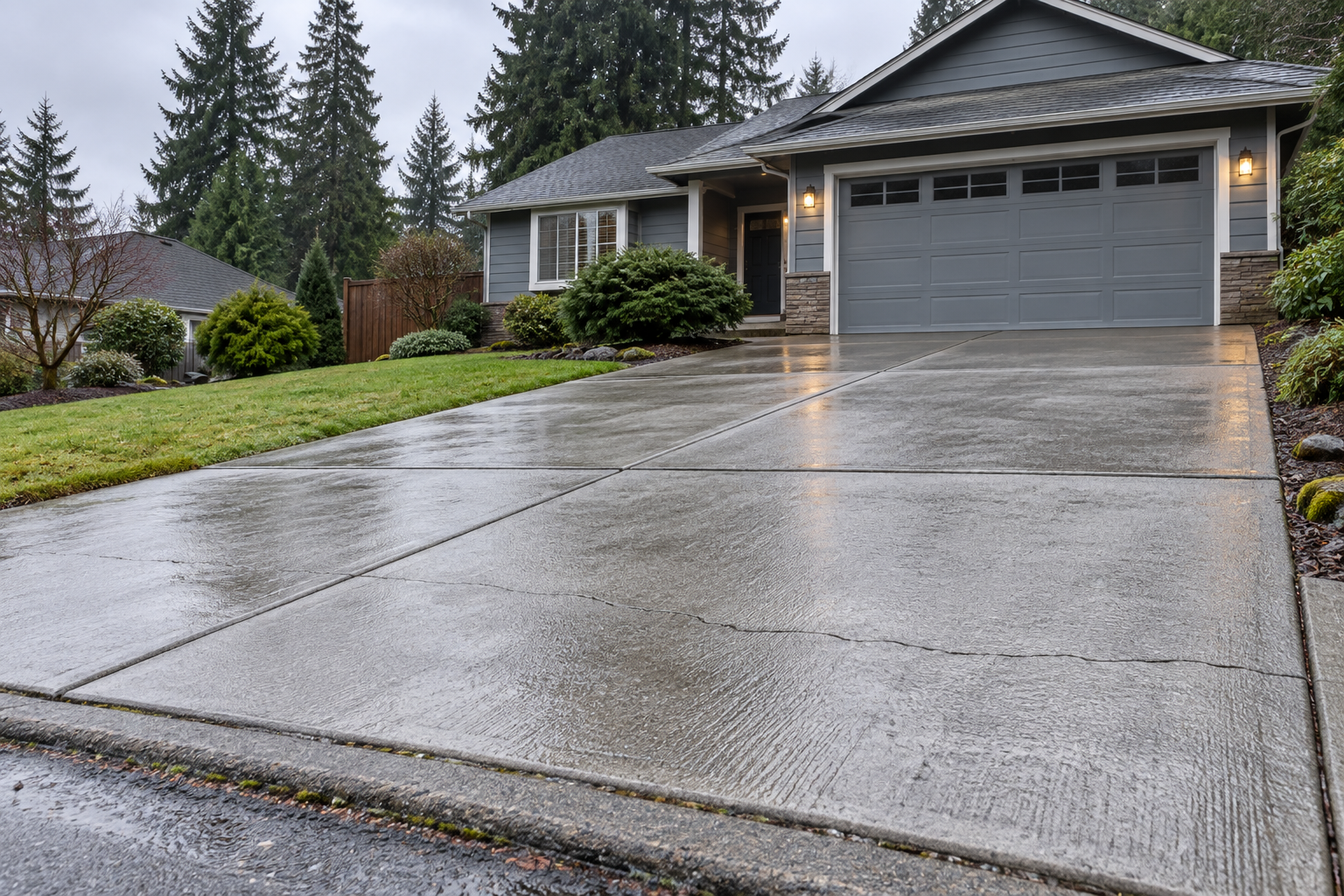
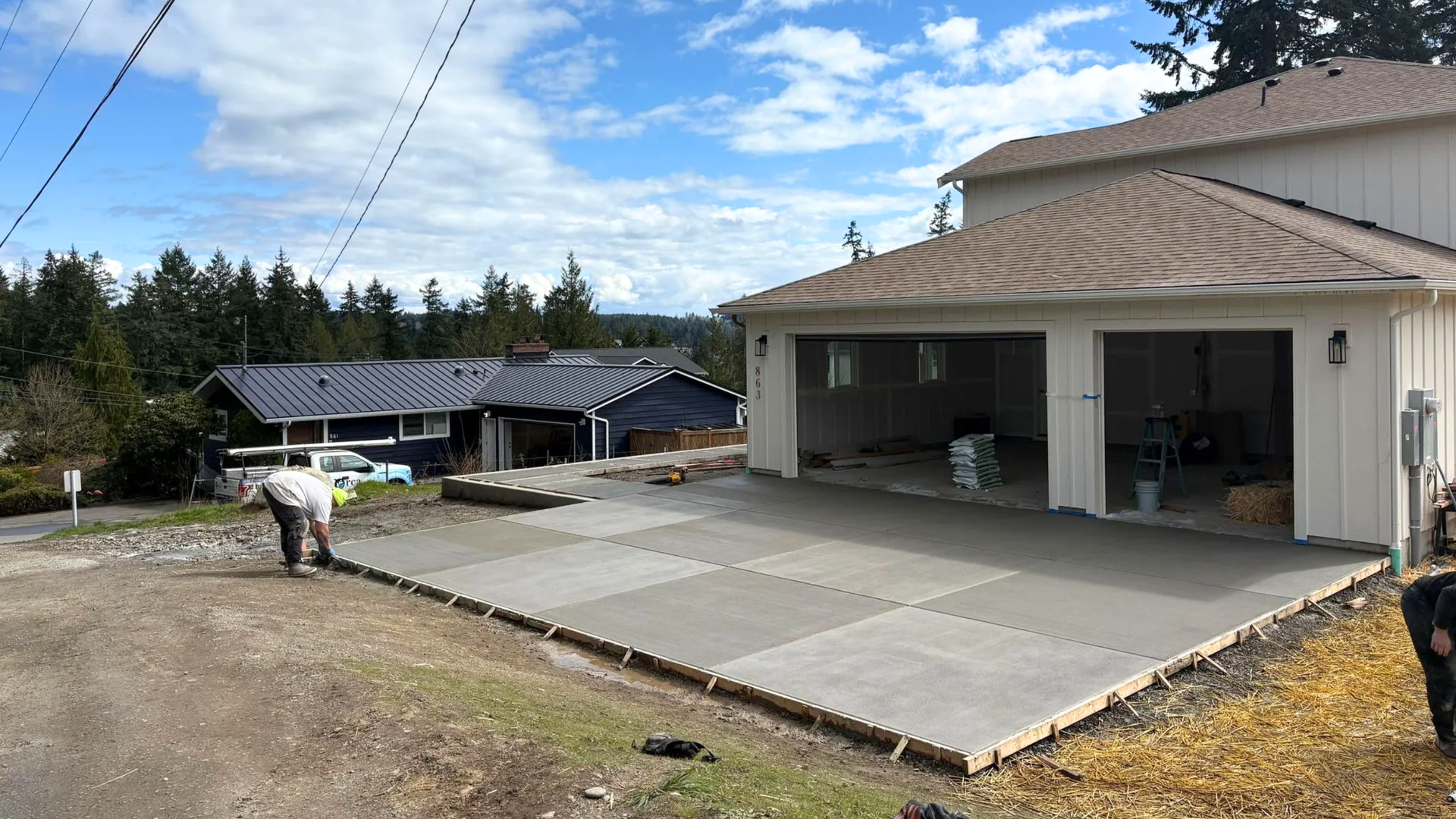
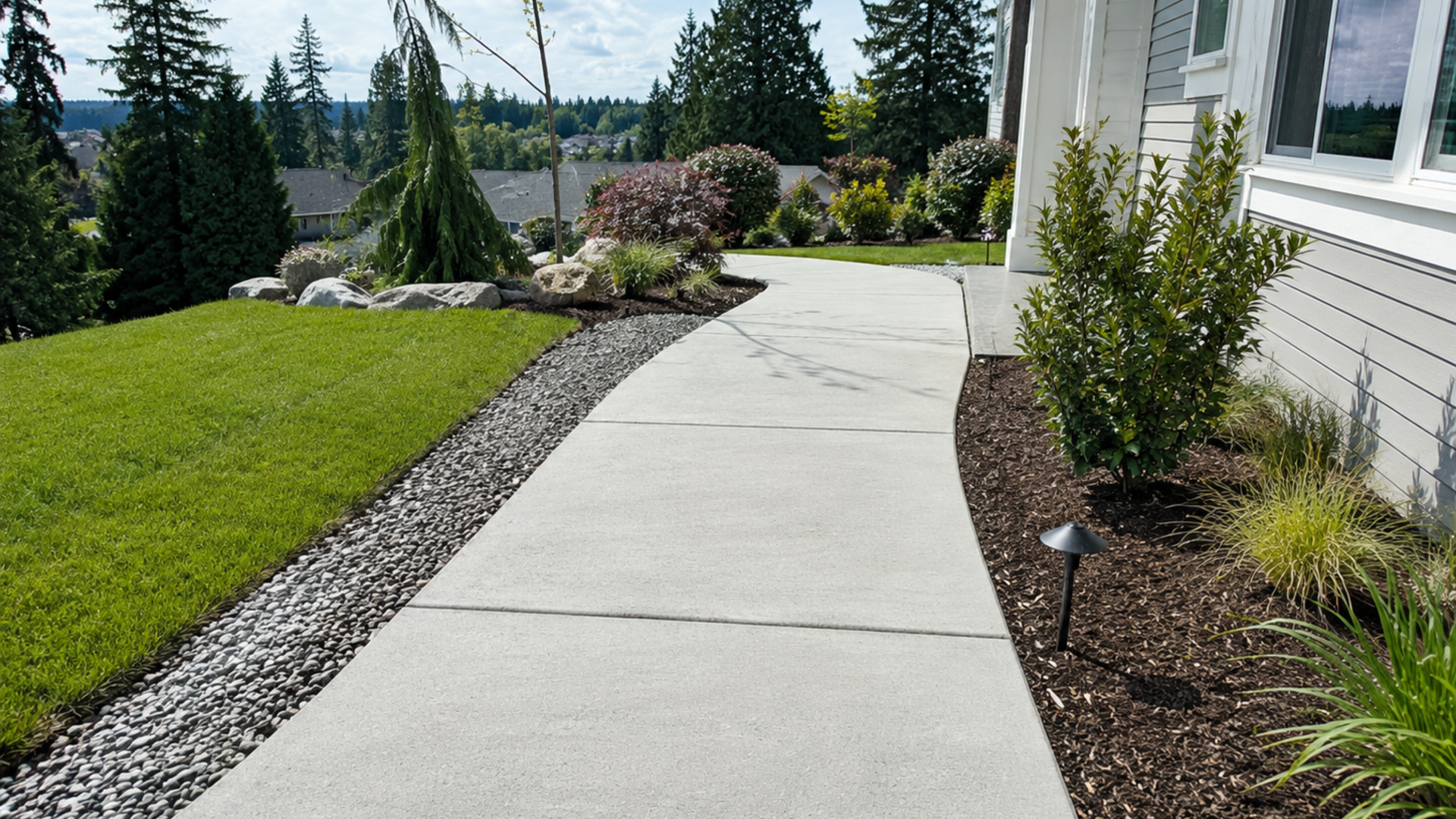
If you are planning a driveway, patio, or walkway and the calendar has slipped into the wet season, you have probably wondered whether you can still pour concrete in winter in Washington. It is a fair question, and one Silverdale homeowners ask often, because our winters look nothing like the deep freezes you see in other parts of the country. The short version is yes, you can pour concrete in winter here, but only when the conditions are managed carefully. This guide explains the rain and temperature rules that decide whether a winter pour succeeds, and how an experienced crew protects the work from start to finish. Whether you are weighing a new concrete driveway installation and repair project or a smaller slab, understanding these rules will help you make a confident decision.
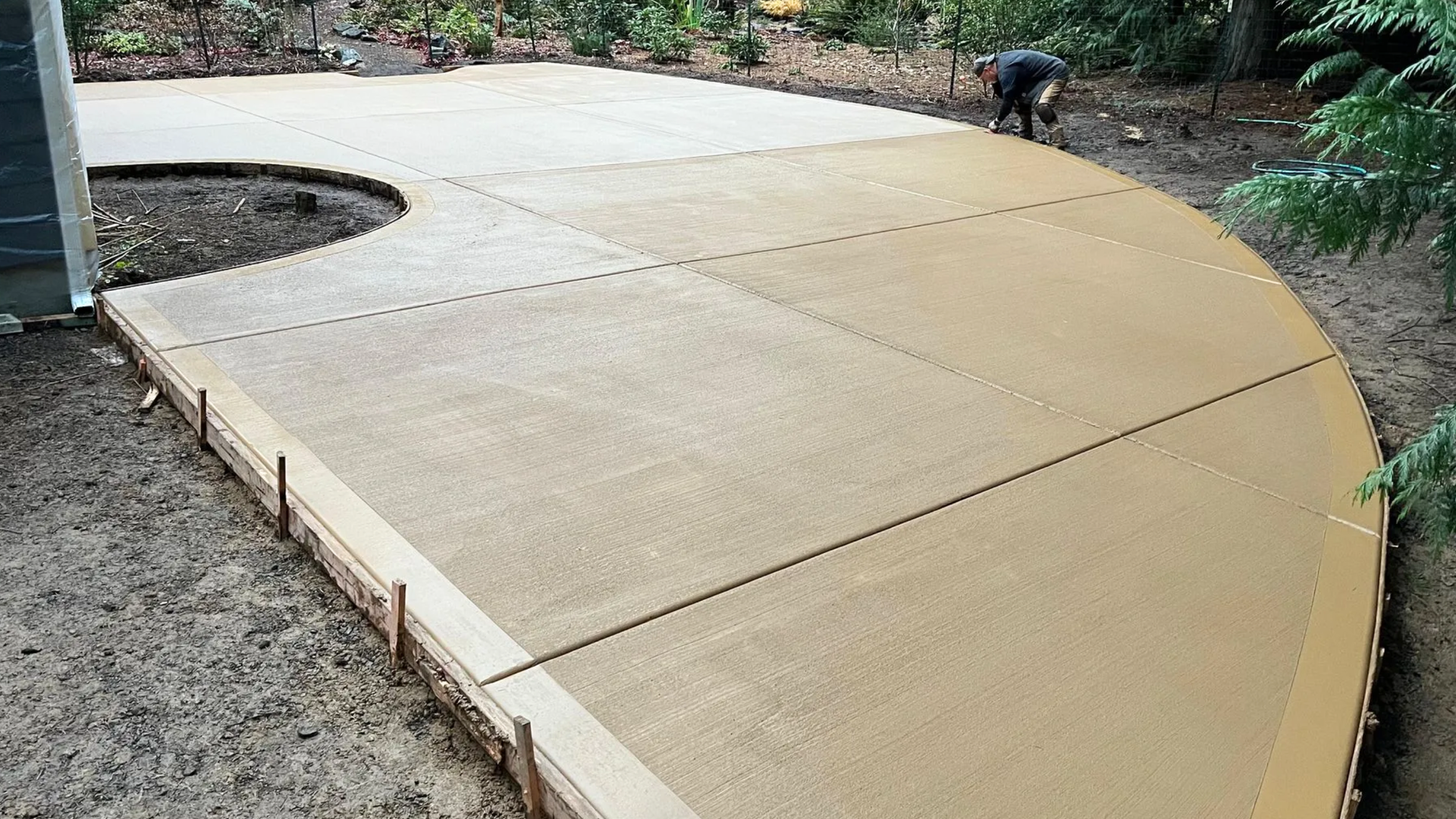
Winter pouring is not about pushing through bad weather and hoping for the best. It is about knowing exactly what fresh concrete can and cannot tolerate, then working within those limits. Get that right and a January pour can perform just as well as one placed in July. Get it wrong and you can end up with a weak, flaking surface that needs attention far sooner than it should.
The Short Answer: Yes, With the Right Conditions
Concrete can absolutely be poured during a Pacific Northwest winter. Crews across Kitsap County do it when a project calls for it, and the results hold up well when the work is done properly. The key word is conditions. A winter pour lives or dies on two factors: keeping the concrete protected from rain, and keeping it above freezing while it gains its early strength.
That is different from simply asking whether it is cold enough or warm enough. Around Silverdale, the temperature is usually manageable. What separates a good winter pour from a bad one is planning: watching the forecast, protecting the slab, and being willing to move the schedule when the weather does not cooperate. When those pieces come together, winter concrete is a genuinely viable option rather than a gamble.
Why Winter Concrete Is Different in the Pacific Northwest
In much of the United States, winter concrete is a story about frost. Contractors in the Midwest or the Mountain West spend the cold months fighting sustained freezes, frozen ground, and temperatures that can shut a pour down entirely. Homeowners who have lived in those regions often carry that same worry west with them.
Western Washington plays by different rules. The Kitsap Peninsula has a mild, maritime winter. Hard freezes happen, but they tend to be short, and snow in the lowlands is uncommon. Instead of deep cold, our defining winter feature is water. The region receives the bulk of its annual rain from late fall through early spring, and that steady, saturating moisture is what makes winter pouring tricky here.
This distinction matters because it changes the entire game plan. If you prepare for a winter pour the way a Colorado contractor would, you will focus on the wrong risk. In the Pacific Northwest, the crew that manages moisture well is the crew that delivers a durable slab. That local knowledge is exactly what separates a contractor who understands this climate from one applying a generic playbook.
The Real Winter Risk: Rain and the Water-to-Cement Ratio
To understand why rain is such a problem, it helps to know what is actually happening inside fresh concrete. Concrete is a carefully balanced mix, and the ratio of water to cement is one of the most important factors in how strong it becomes. That balance is set at the plant and at the pour for a reason. Disturb it, and you weaken the finished product.
What Excess Water Does to Fresh Concrete
When heavy rain falls on concrete that has not yet set, the extra water works its way into the surface and throws off that carefully calibrated water-to-cement ratio. More water in the mix means weaker concrete once it hardens. Rain can also wash away the cement paste that binds everything together, leaving a thin, watery layer on top that never gains proper strength.
The result is not always visible on day one. A slab can look fine when the crew leaves, then reveal problems weeks or months later as the compromised surface begins to break down. That delay is part of what makes rain damage so frustrating, and it is why prevention matters far more than any attempt at a fix after the fact. For a fuller picture of how proper placement and curing set up a slab for success, our guide to the concrete driveway installation process in Silverdale WA walks through each stage.
Why the Surface Layer Suffers First
The top layer of a slab is where appearance and durability meet, and it is the most exposed to rain. When excess water weakens that surface, the damage shows up as scaling, dusting, and flaking, where thin sheets or flakes of concrete separate from the top over time. Once that process starts, it tends to continue, because each flake exposes more surface to moisture and wear.
This is why a pour that is rained on during its first hours can look rough for years. The core of the slab may be sound, but the surface that everyone sees and walks on carries the scars. Protecting those early hours is the single most valuable thing a crew can do for a winter pour. Good ongoing care helps too, and our concrete driveway maintenance tips for Silverdale homeowners cover how to keep any slab in good shape through wet Kitsap winters.
Temperature Rules for Winter Pouring in Washington
Rain is the headline risk here, but temperature still has rules worth respecting. Concrete cures through a chemical reaction that slows as it gets colder. Below roughly 50 degrees Fahrenheit, strength gain slows noticeably. If fresh concrete actually freezes before it has set, the water inside expands and can damage the slab from within, which is the one temperature scenario to avoid completely.
The good news for Silverdale is that daytime winter temperatures usually sit above that danger zone. The bigger concern is overnight lows. A mild, workable afternoon does not help much if the temperature dips toward freezing overnight while the concrete is still young and vulnerable. This is why crews pay close attention to nighttime forecasts, not just the daytime high, and why protection through the night is a standard part of any cold-season pour.
Here is a simple guide to how winter temperatures affect a pour in our region:
| Condition | What It Means for a Winter Pour |
|---|---|
| Daytime highs above 50 F | Workable. Curing proceeds, though more slowly than in summer. |
| Daytime highs 40 to 50 F | Manageable with curing blankets and mix adjustments to support early strength. |
| Overnight lows near 32 F | Protection required. Blankets hold heat in and keep the slab above freezing overnight. |
| Freezing before set | Avoid. Fresh concrete that freezes can suffer lasting internal damage. |
| Rain during or after pour | The top priority to prevent, regardless of temperature. Cover and time around it. |
How Contractors Protect a Winter Pour
A successful winter pour is really a series of protective steps layered together. None of them is complicated on its own, but skipping any one of them can undo the rest. Here is how an experienced Silverdale crew approaches it.
Curing Blankets and Heat Retention
Insulated curing blankets are the workhorse of winter concreting. Laid over a fresh slab, they trap the heat that concrete naturally gives off as it cures, keeping the surface warm enough to gain strength and, critically, above freezing overnight. They also add a layer of defense against light moisture. On a cold Kitsap night, blankets are often the difference between a slab that cures cleanly and one that stalls or suffers.
Mix Adjustments and Accelerators
The concrete itself can be tuned for cold conditions. Set accelerators speed up the early chemical reaction so the slab reaches key strength milestones faster, shortening the window when it is most vulnerable. Mix proportions can also be adjusted to suit the weather. These changes are decided before the truck arrives, which is one more reason winter pours reward planning over improvisation.
Subgrade and Site Preparation
What happens under the slab matters as much as what happens on top. Concrete should never be poured onto frozen or waterlogged ground. Frozen subgrade can settle unevenly as it thaws, and saturated ground adds unwanted moisture from below. A good crew checks and prepares the base, improving drainage and ensuring a stable, unfrozen surface before any concrete is placed. In our wet winters, that groundwork is not optional.
Tracking Dry Weather Windows
Even in a Pacific Northwest winter, the rain does not fall constantly. Dry stretches open up, and the art of winter pouring is scheduling the work to fit them. An experienced local contractor watches the forecast closely, looking for a window long enough to place, finish, and begin protecting the concrete before the next system rolls in.
This is where local experience pays off. Knowing how Kitsap weather tends to move, how long a given project needs, and when to postpone rather than risk it is the difference between a clean winter pour and a damaged one. Flexibility is part of the deal. A crew that is willing to shift a pour by a day or two to catch better weather is protecting your investment, not being difficult. The goal is always to give the concrete the driest possible start.

Which Projects Can Handle Winter, and Which Should Wait
Not every project is equally suited to winter work. Understanding where yours falls helps set expectations before you commit.
Good candidates for a winter pour include urgent repairs, projects with a firm deadline, smaller slabs that can be placed and protected quickly, and jobs where a reliable dry window is in the forecast. Sheltered or partially covered areas are also easier to manage, since they reduce rain exposure.
Projects better suited to waiting include large, exposed pours that are hard to protect all at once, purely cosmetic upgrades with no time pressure, and decorative work where surface perfection is the whole point. A new concrete patios and designs project meant for summer entertaining, for example, often makes sense to schedule for the drier months, both for the finish and for your own use of the space. If your project can wait comfortably, the drier season removes most of the weather risk. If it cannot, winter is workable with the right crew and precautions.
How Winter Pouring Affects Long-Term Durability
Done correctly, a winter pour has no lasting disadvantage. Concrete placed in cool weather, kept above freezing, protected from rain, and allowed to cure properly can reach the same strength and longevity as a summer slab. The finished product does not carry a hidden penalty simply because of the month it was poured.
The durability problems people associate with winter concrete almost always trace back to a specific failure: a slab that got rained on before it set, or one that froze while still green. Those are failures of process, not of the season itself. When the process is sound, a winter driveway can deliver the same decades of service you would expect otherwise, as we cover in our look at how long a concrete driveway lasts in Silverdale WA. On the other hand, if you have inherited a slab that was poured badly in a past wet season and is now scaling or crumbling, it may be time to weigh whether to repair or replace your concrete driveway. The lesson in both directions is the same. With concrete, how it is poured matters far more than when.
Frequently Asked Questions
Can you pour concrete in winter in Washington?
Yes. Western Washington rarely sees the deep freezes that make winter pouring risky elsewhere. The main challenge is rain, so a successful winter pour depends on protecting the concrete from moisture and timing the work around dry weather windows.
Does rain ruin freshly poured concrete?
Heavy rain during or shortly after a pour can be very damaging. Excess water disrupts the water-to-cement ratio and weakens the top surface layer, leading to scaling and flaking later. It is the biggest winter risk in the Silverdale area.
What temperature is too cold to pour concrete?
Concrete gains strength slowly below about 50 degrees Fahrenheit, and freezing before it sets can cause lasting damage. Our winters are usually cool rather than frozen, so with blankets and careful scheduling, pours in the 40s are often workable when nights stay above freezing.
How do contractors protect concrete during a winter pour?
Common steps include insulated curing blankets, set accelerators or adjusted mixes, scheduling between rain systems, and preparing the subgrade so concrete is never poured on frozen or saturated ground.
Should I wait until summer to pour concrete?
For non-urgent projects, the drier months often give the cleanest result with the least weather risk. But with a dry window and an experienced crew, a well-managed winter pour can perform just as well. Urgent repairs are often good winter candidates.
Is winter concrete weaker than summer concrete?
Not if it is poured and protected correctly. Weakness comes from uncontrolled conditions, such as a slab soaked by rain or allowed to freeze, not from winter itself.
Plan Your Winter Pour With Pacific Roots Concrete
So, can you pour concrete in winter in Washington? Yes, as long as the work respects the two rules that matter most here: keep the rain off the fresh concrete, and keep it above freezing while it gains strength. In our maritime climate, that means the water is the real challenge, not the cold, and success comes down to protection, mix planning, and patience with the forecast. Handled well, a winter pour can be every bit as durable as one placed in the height of summer.
The safest way to pour in the off-season is with a local crew that knows how Kitsap weather behaves and treats timing as part of the job. If you are considering a winter project, we can help you weigh whether to proceed now or wait, and how to protect the work either way. Request a free estimate from Pacific Roots Concrete and we will walk through your project, your timeline, and the smartest plan for a slab that lasts.