Concrete Walkways & Sidewalks in Silverdale: Cost, Design & Permits
An updated front entry path or garden walkway instantly lifts your home's curb appeal while giving you a safe, slip-resistant surface underfoot. If you are working out a project budget, understanding the average concrete walkway cost in Silverdale will help you choose the right finish and layout for your property. This guide covers the numbers, the design choices, and the local code basics, so you can plan with clear expectations before you ever call a contractor. When you are ready to see options for your specific yard, our concrete sidewalks and walkways service is built exactly for this kind of project.
Walkways are one of the most cost-effective upgrades in residential concrete. They are smaller than driveways or patios, so the total spend is lower, but the visual payoff is high. The trick is knowing what drives the price and where it is worth investing, especially in a wet climate like ours where the groundwork under the slab matters as much as the surface on top.
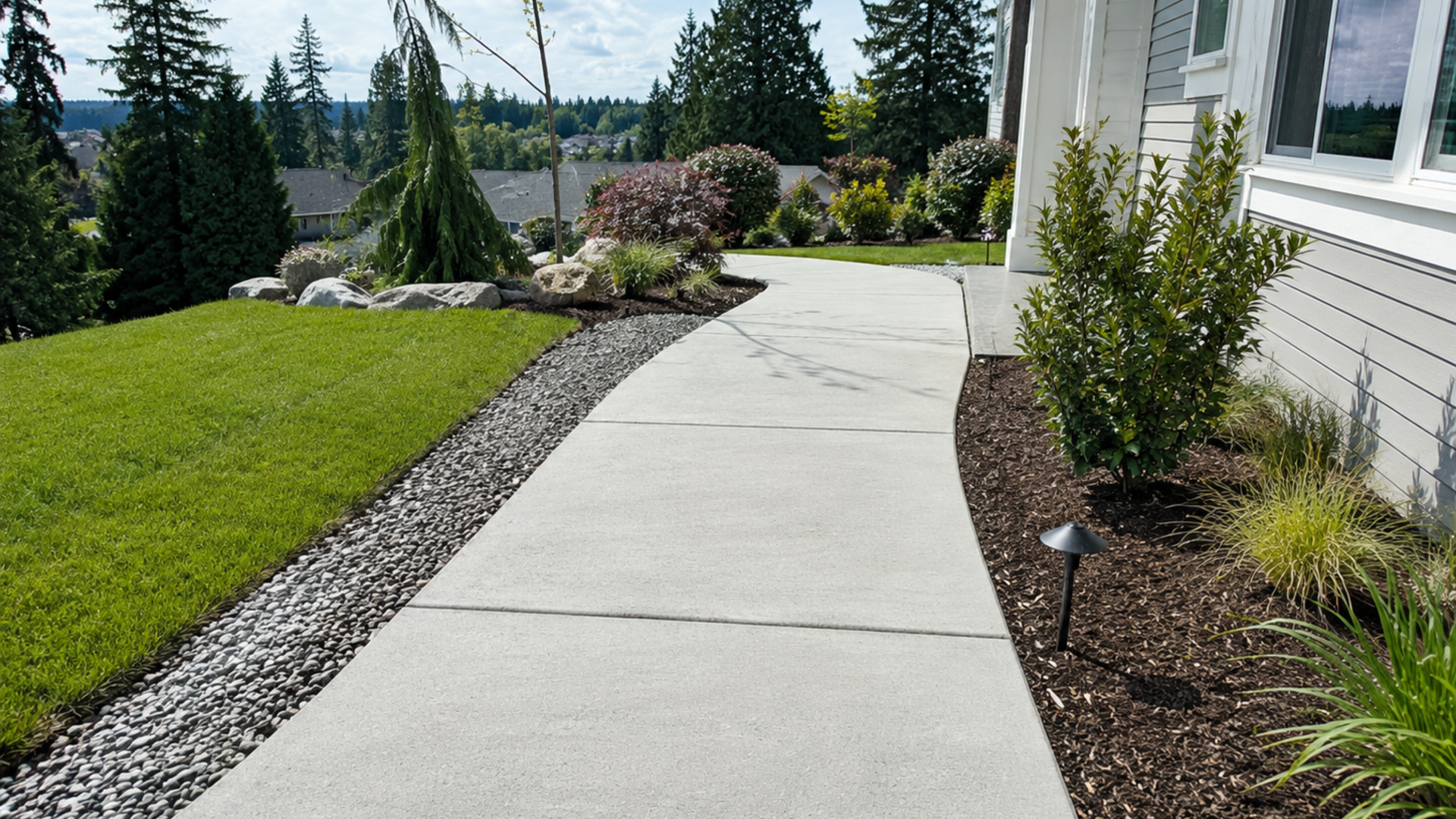
What a Concrete Walkway Costs in Silverdale
Let us start with the numbers, since that is likely why you are here. The figures below are general 2026 market ranges rather than a quote for your exact project. Local pricing shifts with site conditions, material costs, and the specifics of your layout, so treat these as a planning framework and get an on-site estimate for a real number.
Cost by Finish Type
Finish is one of the two biggest levers on price. Here is how the common options generally compare:
- Standard broom finish: roughly 8 to 14 dollars per square foot installed. This is the most popular residential choice, and its light texture adds slip resistance.
- Exposed aggregate: a mid-range step up, with the pebbled surface offering both grip and a more finished look.
- Stamped or colored concrete: roughly 15 to 25 dollars or more per square foot, depending on the pattern and color complexity.
- Material only, no labor: roughly 3 to 5 dollars per square foot, useful only as a reference point since professional installation is where durability is won or lost.
Cost by Walkway Size
Square footage is the other major lever. Larger walkways cost more in total, but the price per square foot can dip a little on bigger pours because some costs are fixed. Here is a rough planning guide for a standard broom-finish path:
| Walkway Size | Typical Dimensions | General Installed Range |
|---|---|---|
| Small front path | About 75 sq ft | Roughly 700 to 1,100 USD |
| Standard entry walkway | About 100 sq ft | Roughly 900 to 1,500 USD |
| Typical residential path | About 200 sq ft | Roughly 1,600 to 2,800 USD |
| Long or multi-section | About 400 sq ft | Roughly 3,200 to 5,600 USD |
Decorative finishes push these totals higher, and heavy site prep can too. For comparison against a larger project, our
concrete patio cost in Silverdale WA guide is a useful sibling reference if you are weighing more than one addition.
Cost Factors and Hiring a Qualified Silverdale Concrete Contractor
The headline ranges only tell part of the story. What lands your project at the low or high end of those ranges comes down to a handful of specific factors, and to the crew you hire.
The Factors That Move Your Price
When you evaluate walkway pricing, the total generally hinges on a few things:
- Square footage: the single biggest driver, as covered above.
- Finish and decoration: stamping, coloring, and borders add material and labor.
- Excavation and site prep: clearing, grading, and hauling away old concrete or dirt all add cost.
- Base preparation: a proper crushed rock base is not the place to cut corners.
- Access and complexity: tight access, many curves, or slopes increase labor time.
- Thickness and reinforcement: standard residential walkways use about 4 inches of 3,000 PSI concrete with wire mesh or fiber reinforcement.
If you are budgeting several concrete projects at once, it helps to see how these factors scale up. Our concrete driveway cost per square foot in Washington guide breaks down the same levers on a larger surface.
Why the Crushed Rock Base Matters in Kitsap Soil
This is where local knowledge earns its keep. Western Washington soil holds a lot of moisture, and saturated ground can shift and settle over time. Pour a walkway on a poorly prepared base and you invite the exact problems homeowners dread: uneven settling, cracking, and a path that looks tired within a few years.
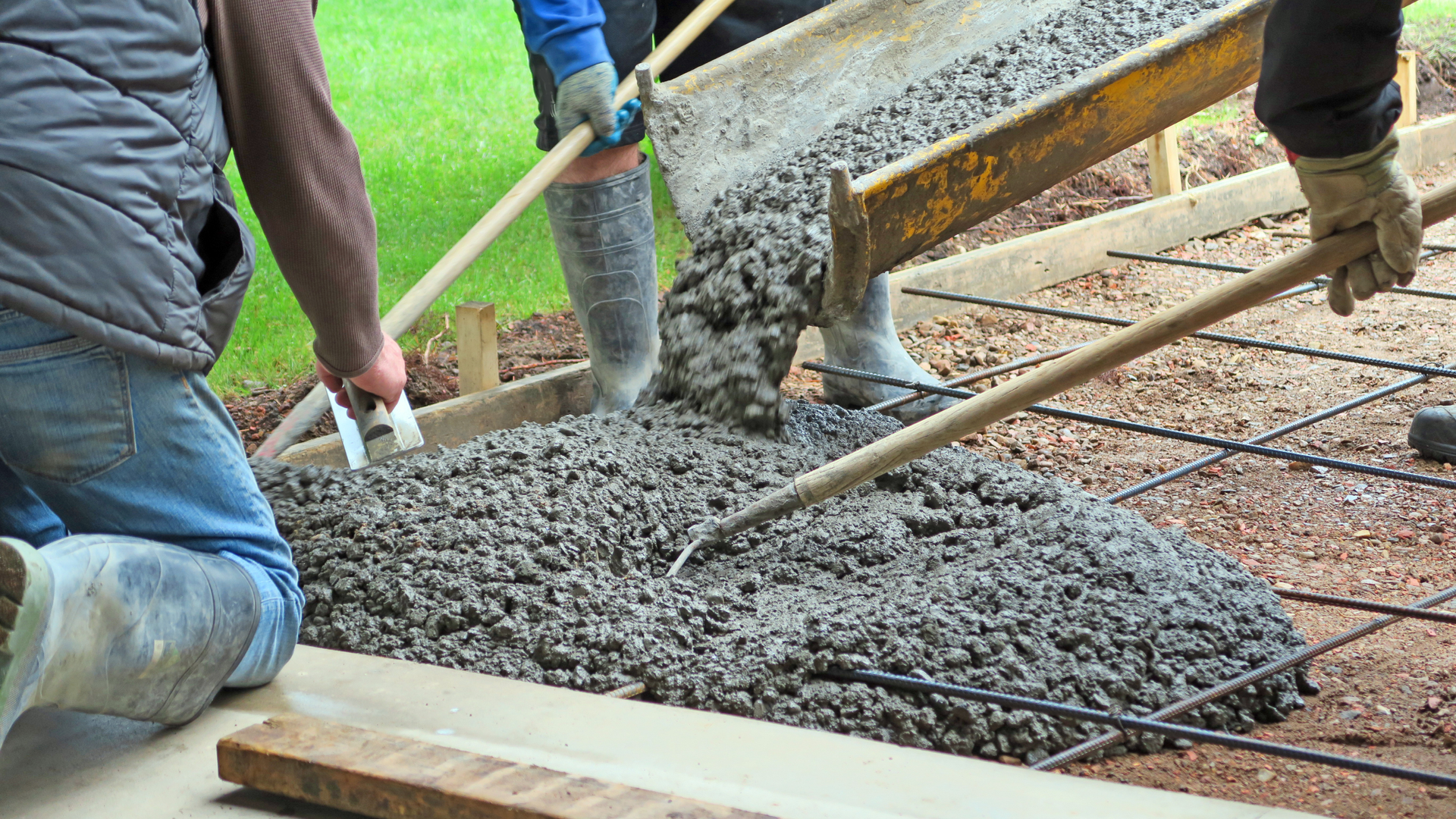
A qualified crew prevents this by excavating to the right depth, laying a proper crushed rock base, and compacting it thoroughly before any concrete is placed. That compacted base does two jobs at once. It gives the slab stable support, and it improves drainage so water moves through rather than pooling under the concrete. In our wet winters, that groundwork is the difference between a walkway that lasts decades and one that fails early.
What to Look for When Hiring
Because so much of a walkway's lifespan is decided below the surface, the contractor you choose matters more than the finish you pick. A trustworthy Silverdale concrete contractor should be able to:
- Explain their base preparation and compaction process clearly.
- Provide a detailed, itemized written estimate rather than a vague number.
- Show local experience with Kitsap soil and drainage conditions.
- Confirm they are licensed and insured in Washington.
- Talk openly about control joints, thickness, and reinforcement.
If a bid comes in surprisingly low, ask what base preparation it includes. Skimping there is the most common way a cheap walkway becomes an expensive repair.
Walkway Finish Choices
Cost and design go hand in hand, so it is worth knowing your options before you settle on a budget. The right choice balances looks, safety, and price. The finish sets both the appearance and the grip of your walkway, and here are the four most common options for Silverdale homes.
Broom Finish
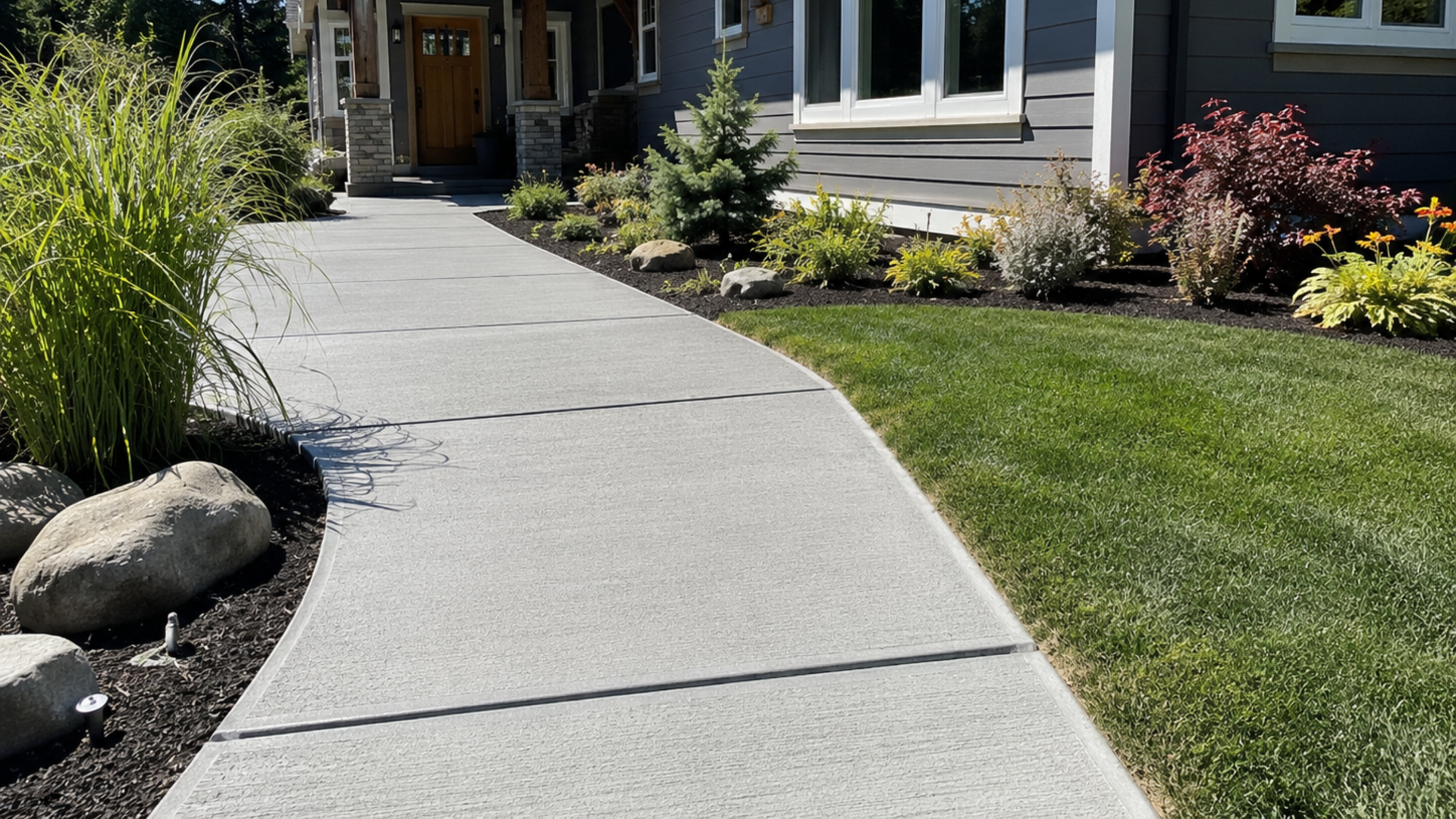
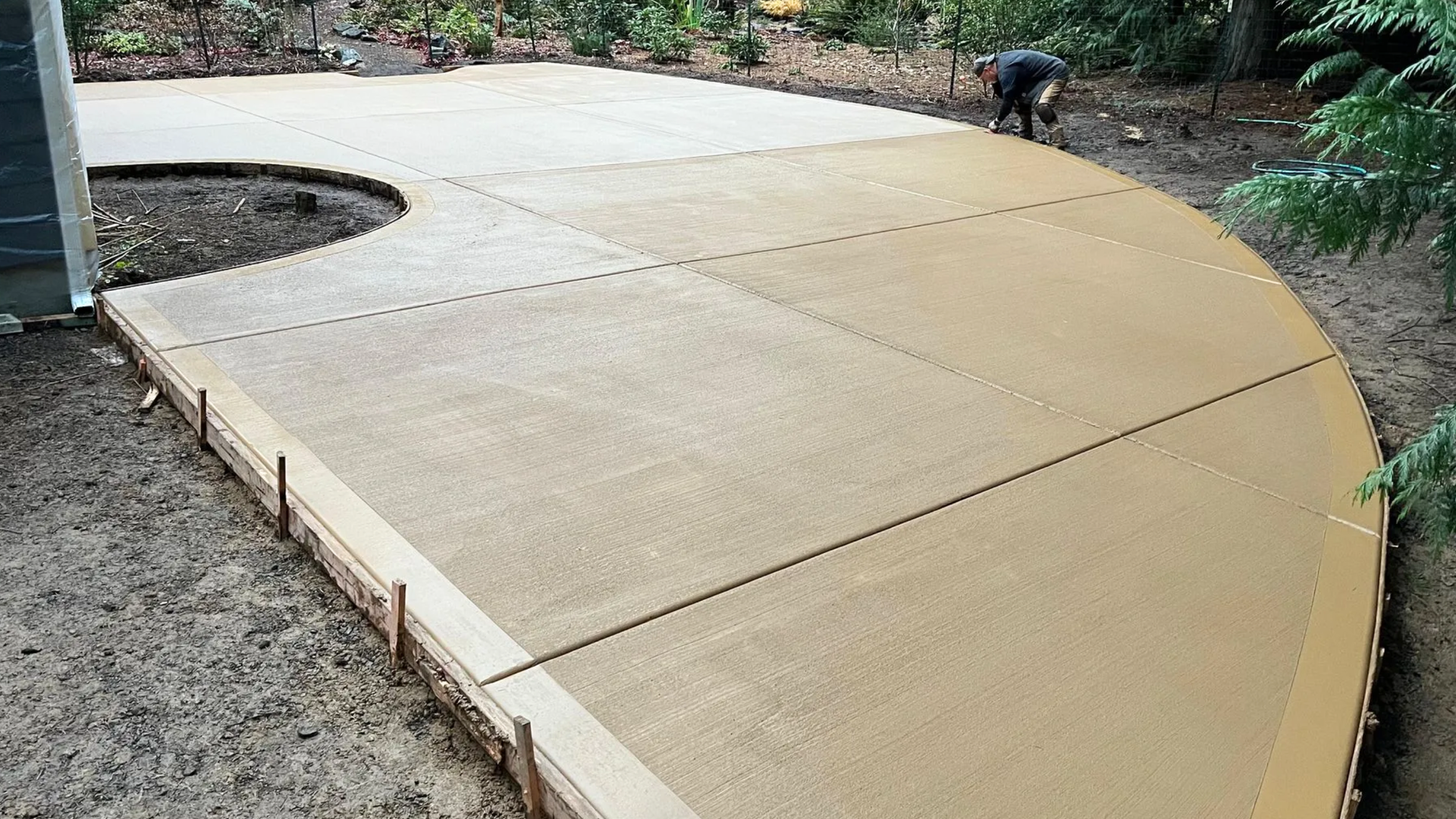
The classic, budget-friendly choice and the most popular for residential walkways. A broom is dragged across the fresh surface to create fine ridges, giving the path a subtle texture that adds slip resistance. It handles our wet winters well and keeps costs down, which is why most standard walkways use it.
Exposed Aggregate
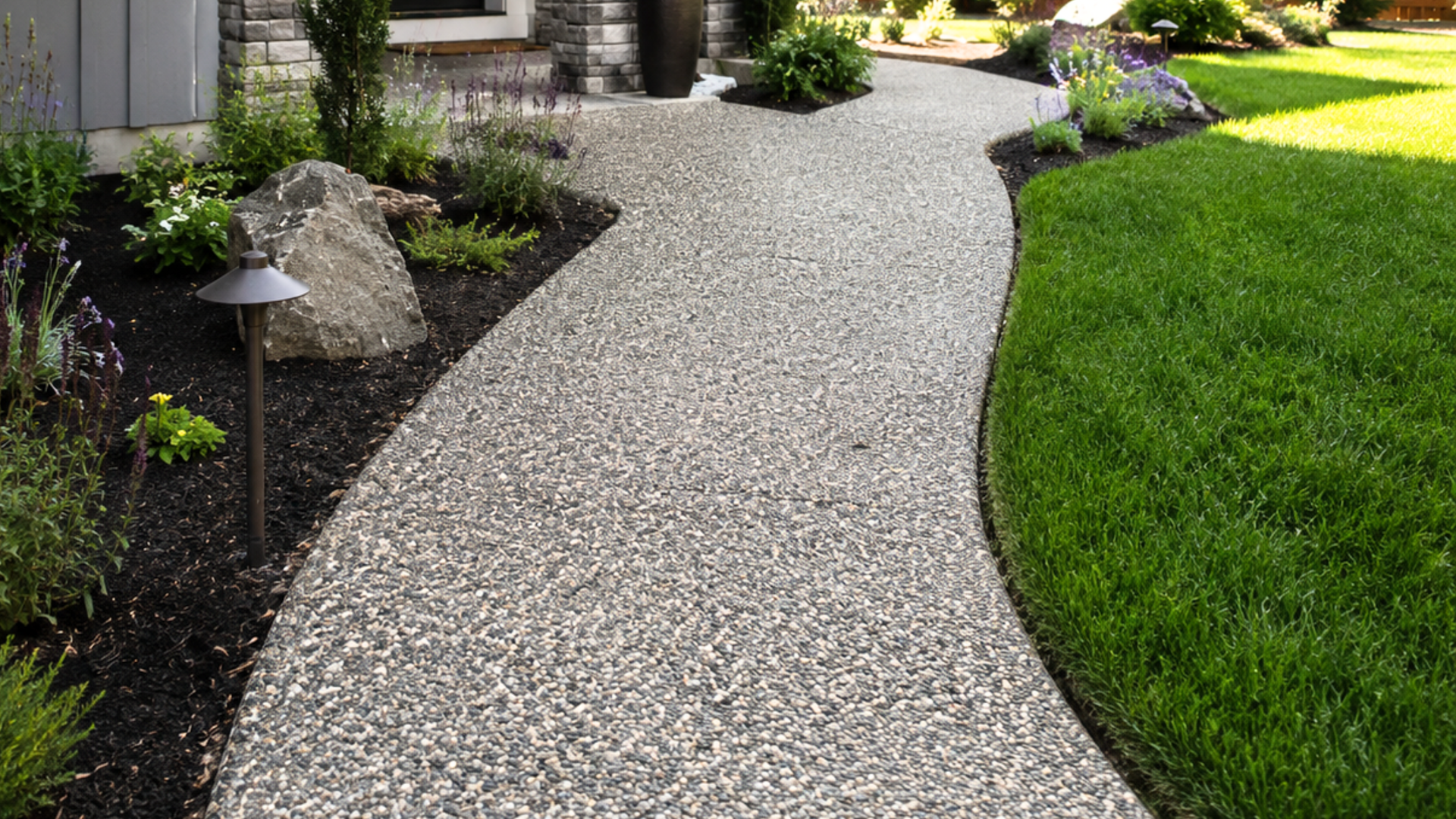
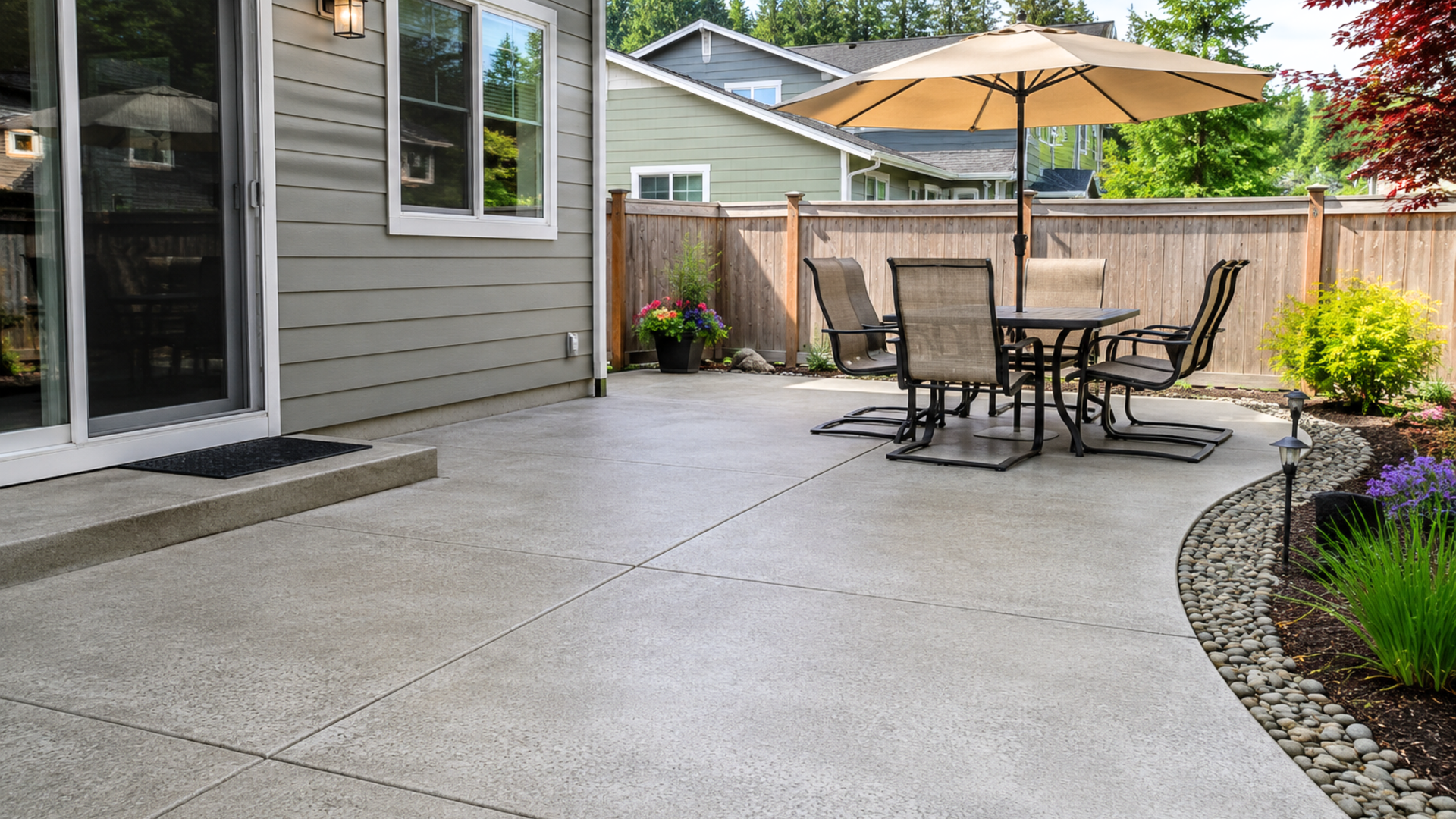
A decorative finish that reveals the small stones within the concrete for a pebbled, natural look. It hides wear and surface marks well over time, and the textured surface grips underfoot even when wet, making it a strong middle-ground option between plain and premium.
Stamped Concrete
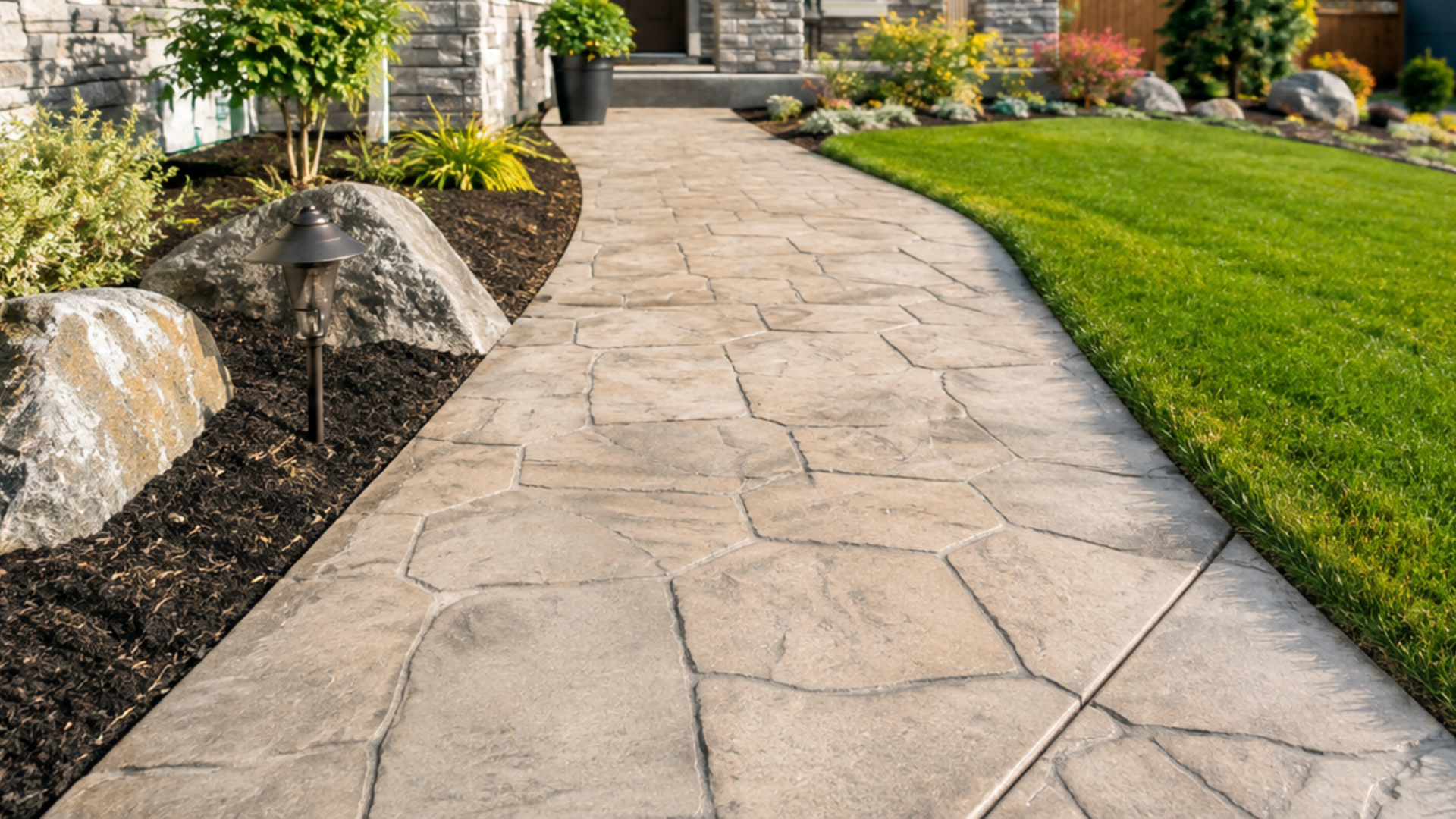
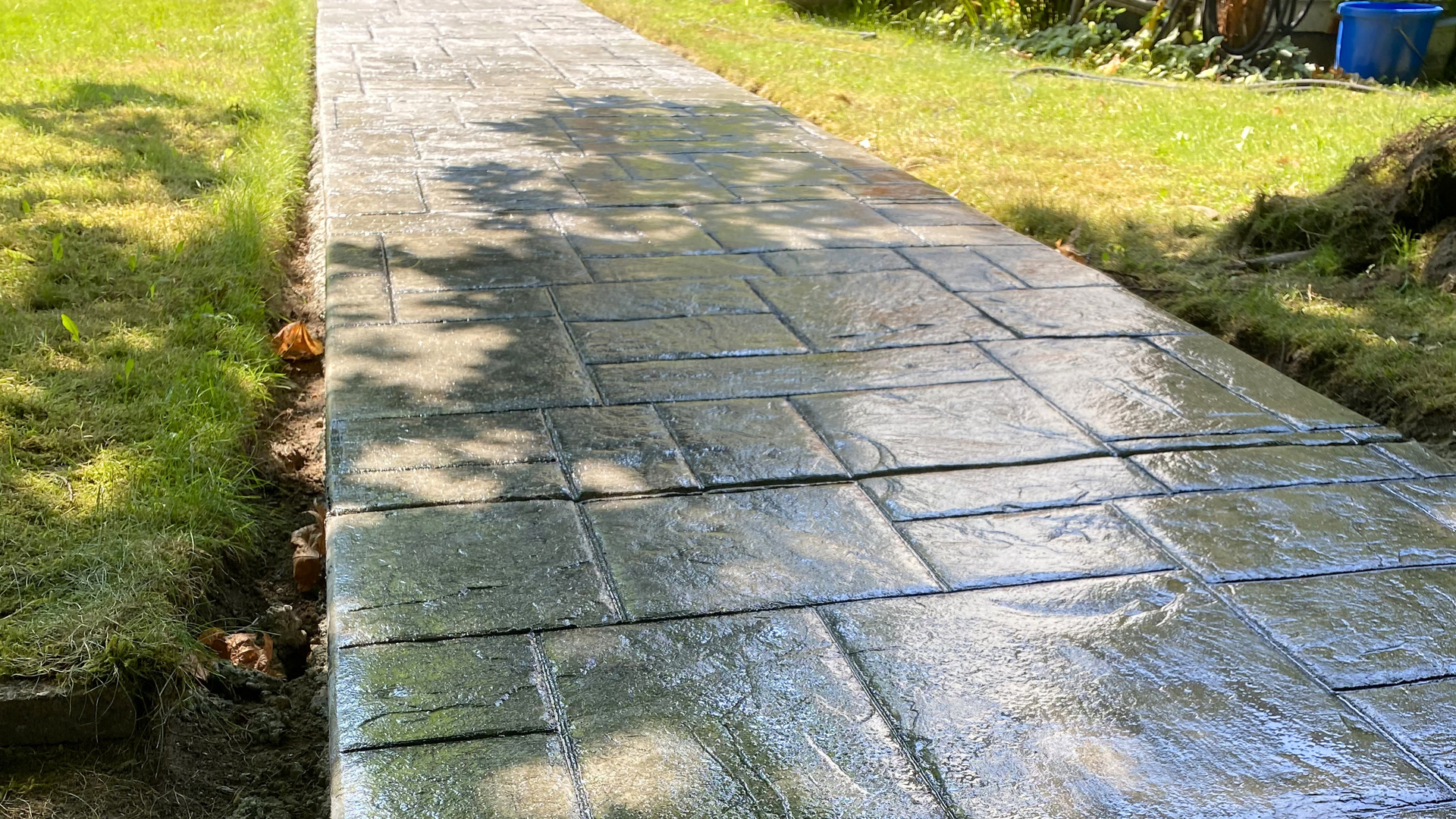
A higher-end finish that presses patterns into the fresh concrete to mimic stone, brick, or slate, letting you match your home's style at a lower cost than the real material. Explore our stamped and colored concrete work if you want a custom, upscale look for your path.
Colored Concrete
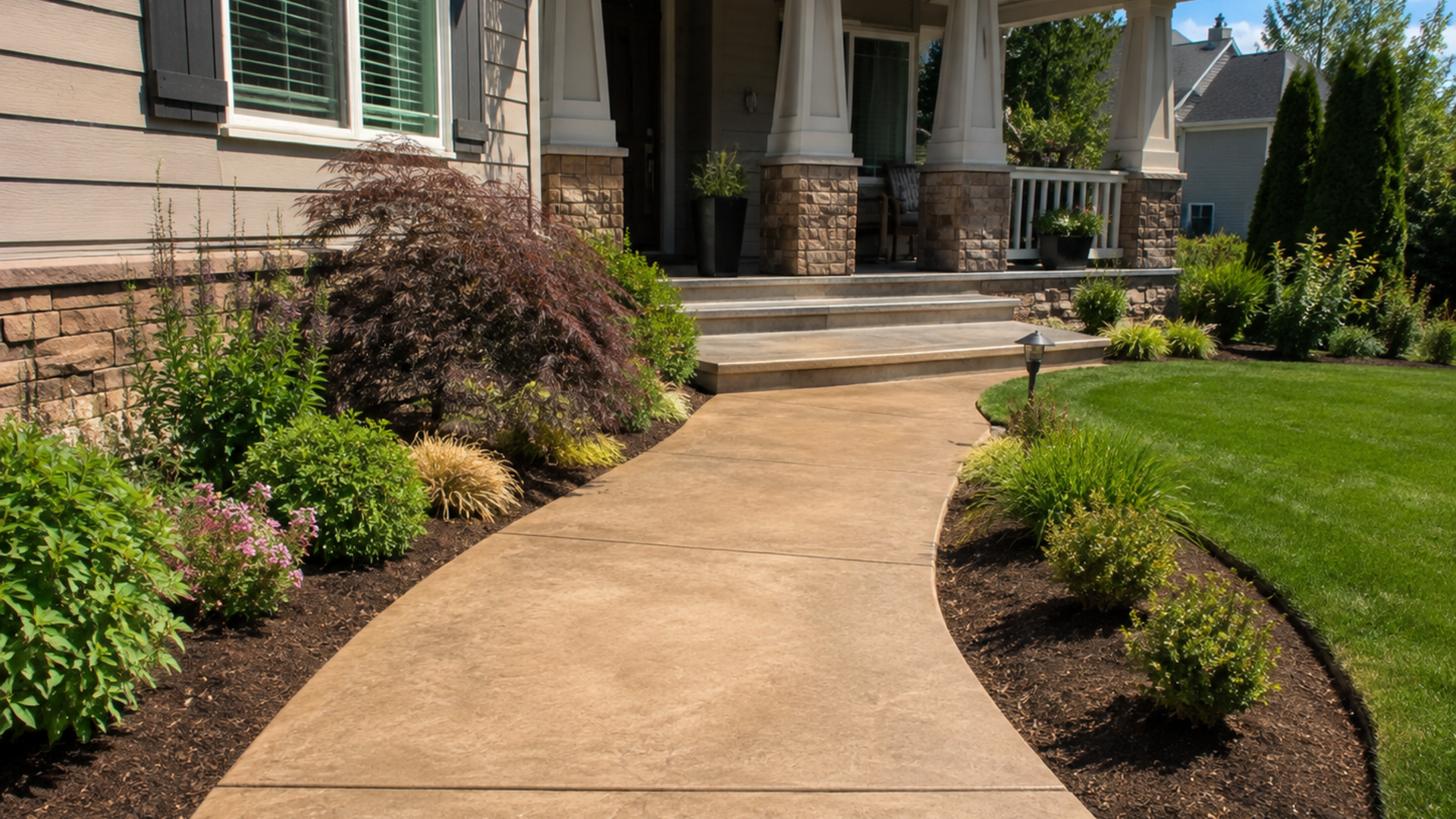
Integral color mixed into the concrete, or stains applied to the surface, add warmth and character beyond standard gray. Coloring pairs well with stamping or can stand on its own for a clean, tinted finish that complements your landscaping and exterior.
For an outdoor path in a rainy climate, slip resistance should stay near the top of your priorities. Broom and aggregate finishes handle wet conditions well, while very smooth finishes can turn slick and are usually a poor fit for exterior walkways.
Layout and Curb Appeal
The shape and route of a walkway affect both cost and impact:
- Straight runs are the most economical to form and pour.
- Gentle curves cost a little more but soften a yard and feel more inviting.
- Borders and contrasting edges add definition and a custom look.
- Width matters too. A comfortable residential path is often around 3 to 4 feet wide, enough for two people or easy movement to the door.
A well-designed walkway does more than connect two points. It guides the eye, frames your entry, and raises the perceived value of the whole property.
Code and Permits for Walkways in Silverdale
Good news for most homeowners: a standard, at-grade concrete walkway in Silverdale often does not require a building permit from Kitsap County. But there are real exceptions worth checking before you build:
- Walkways in a critical area, shoreline buffer, or their setbacks can require a permit at any size.
- Raised walkways above a certain height, or those built over a basement or lower story, may need approval.
- Projects that add significant impervious surface can trigger stormwater review, since concrete sheds water rather than absorbing it.
Because these triggers depend on your specific parcel, it is smart to confirm before pouring. Our full guide to whether you need a permit for concrete work in Silverdale walks through the Kitsap County rules in detail. A good contractor will also flag anything that applies to your lot as part of planning.
Planning and Timing Your Walkway Project
A little planning goes a long way toward a smooth project and a durable result. Two things are worth thinking about early:
- Timing the pour. Our climate has a narrow ideal window for concrete, and the wet season adds risk. Our guide to the best time of year to pour concrete in Washington explains when to schedule for the cleanest result.
- Sequencing with other work. If you are also planning landscaping, lighting, or a patio, coordinating the order can save money and avoid tearing up finished work.
Getting these details right up front means fewer surprises and a walkway that holds up for the long haul.
Frequently Asked Questions
How much does a concrete walkway cost in Silverdale?
As a general 2026 guide, a standard broom-finish walkway runs roughly 8 to 14 dollars per square foot installed, and decorative or stamped finishes run closer to 15 to 25 dollars or more. A typical residential path often lands around 1,600 to 2,400 dollars, but your exact price depends on size, finish, and site conditions. An on-site estimate gives the most accurate number.
What affects the cost of a concrete walkway?
The biggest drivers are square footage, finish type, and site preparation. Decorative stamping and coloring add cost, as do excavation, grading, old-surface removal, and the crushed rock base. Difficult access can also raise labor time.
Do I need a permit for a concrete walkway in Silverdale?
Many standard, at-grade walkways do not require a Kitsap County building permit, but work in a critical area or shoreline buffer, raised walkways, and projects adding significant hard surface can trigger review. Confirm with the county or your contractor first.
What is the best finish for a walkway in a wet climate?
A broom finish is the most common and cost-effective choice, and its texture adds slip resistance for rainy winters. Exposed aggregate and certain stamped textures also grip well. Very smooth finishes can get slick when wet.
Why is the base so important for a walkway in Silverdale?
Our wet soil can shift and settle, so a properly excavated and compacted crushed rock base is essential. It gives the slab stable, well-draining support and helps prevent the settling and cracking that come from pouring on poorly prepared ground.
How long does a concrete walkway last?
With a solid base, proper thickness, and basic maintenance, a walkway can last several decades. Longevity depends heavily on base preparation and installation quality, which is why the groundwork matters as much as the concrete.
Get Your Walkway Project Started With Pacific Roots Concrete
A new concrete walkway is one of the most rewarding upgrades you can make, adding curb appeal and a safe, lasting surface without the price tag of a larger project. The keys are choosing a finish that suits our wet climate, budgeting realistically for size and site prep, and hiring a crew that treats the base as seriously as the surface. Do those three things and you will have a path that looks great and holds up for decades.
We would be glad to help you plan yours. As a local team that knows Kitsap soil, drainage, and code, we can walk your property, recommend the right finish and layout, and give you a clear, itemized price. Request a free estimate from Pacific Roots Concrete and let us help you build a walkway that fits your home and your budget.