Do You Need a Permit for Concrete Work in Silverdale, WA?
Planning a new driveway, patio, or walkway in Kitsap County? Before any ground is broken, it pays to know whether your project needs a permit. It is one of the first questions homeowners ask, and the honest answer is: it depends on what you are building and where. Some concrete work in Silverdale sails through with no permit at all. Other projects trigger county review, and finding that out after the pour is a costly way to learn. This guide breaks down which is which, using the actual rules Kitsap County applies, so you can plan with confidence. If you would rather hand the details to someone who does this every week, a local
Silverdale concrete contractor can sort it out for you.
Here is the thing most online permit advice gets wrong. It tells you to "check with your local building department" and leaves you there. That is not useful. Silverdale sits in unincorporated Kitsap County, which means one specific authority governs your project, with specific thresholds you can actually look up. Let us get into them.
The Short Answer
For a lot of routine residential concrete, you will not need a building permit. A standard driveway or walkway poured at ground level, on an ordinary lot away from sensitive areas, usually falls outside the county's building-permit requirements. That covers a good share of the everyday jobs homeowners call about.
But "usually" is carrying weight in that sentence. A handful of specific conditions flip a no-permit project into a permit-required one, and they are easy to miss if you do not know to look. Height, location, size, and drainage all matter. The rest of this guide walks through exactly what to watch for.
Who Sets the Rules: Kitsap County DCD
Because Silverdale is unincorporated, it does not have its own city building department. Instead, the Kitsap County Department of Community Development, known as DCD, handles permitting for the area. They are the office you or your contractor will deal with, and their published guidance is the source of truth for what needs a permit.
This matters for accuracy. Permit rules vary from one jurisdiction to the next, so advice written for Seattle, Tacoma, or a generic "your city" can steer you wrong here. Everything in this guide reflects Kitsap County's own requirements. If you ever want to confirm a detail for your specific parcel, DCD staff can be reached at 360.337.5777, and the county's Permit Pathways tool points you to the right application.
Concrete Projects That Often Do Not Need a Permit
Let us start with the good news, since it applies to many projects. In general, uncovered, at-grade concrete flatwork does not require a building permit from DCD as long as it stays low to the ground and clear of sensitive areas.
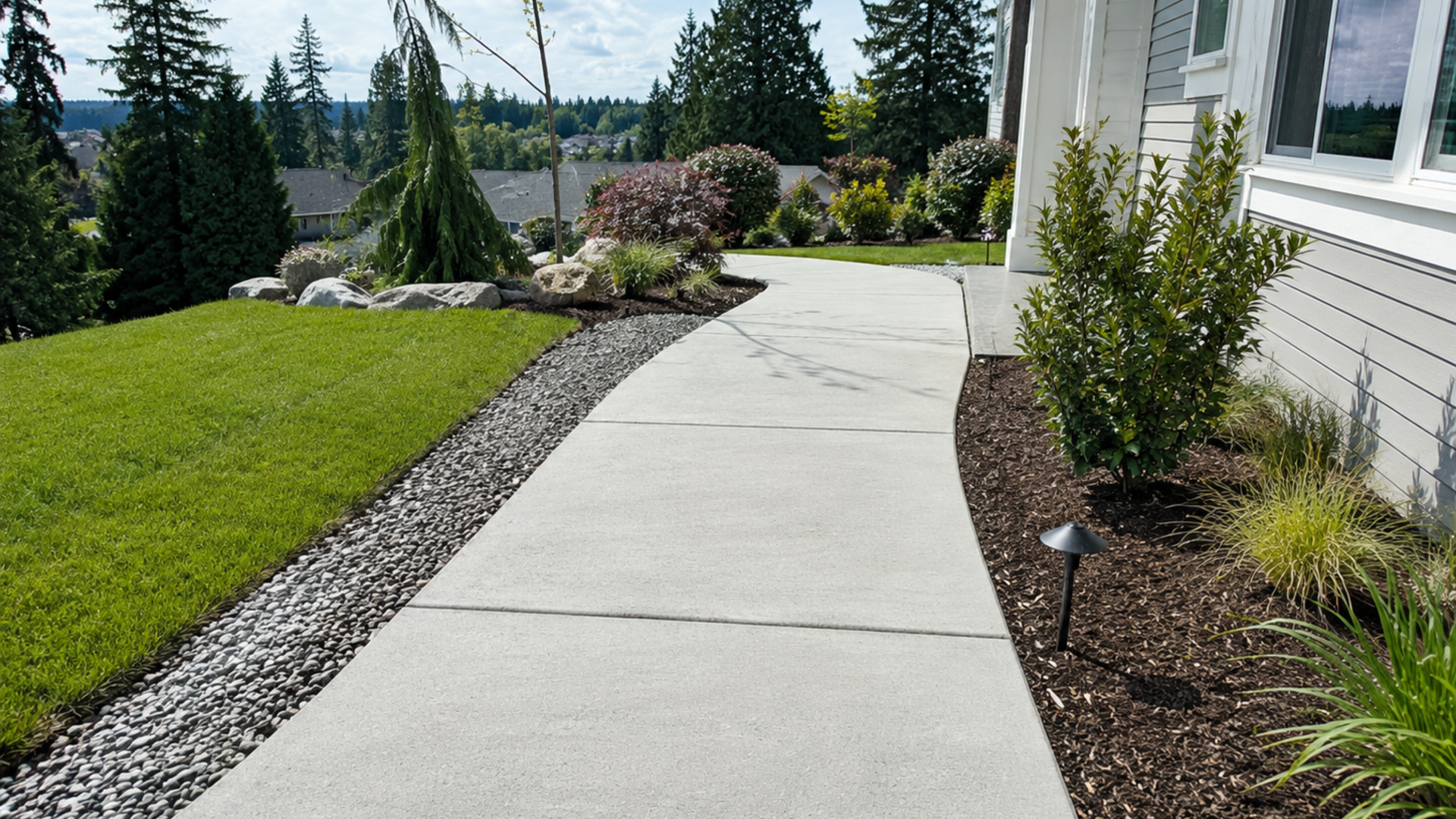
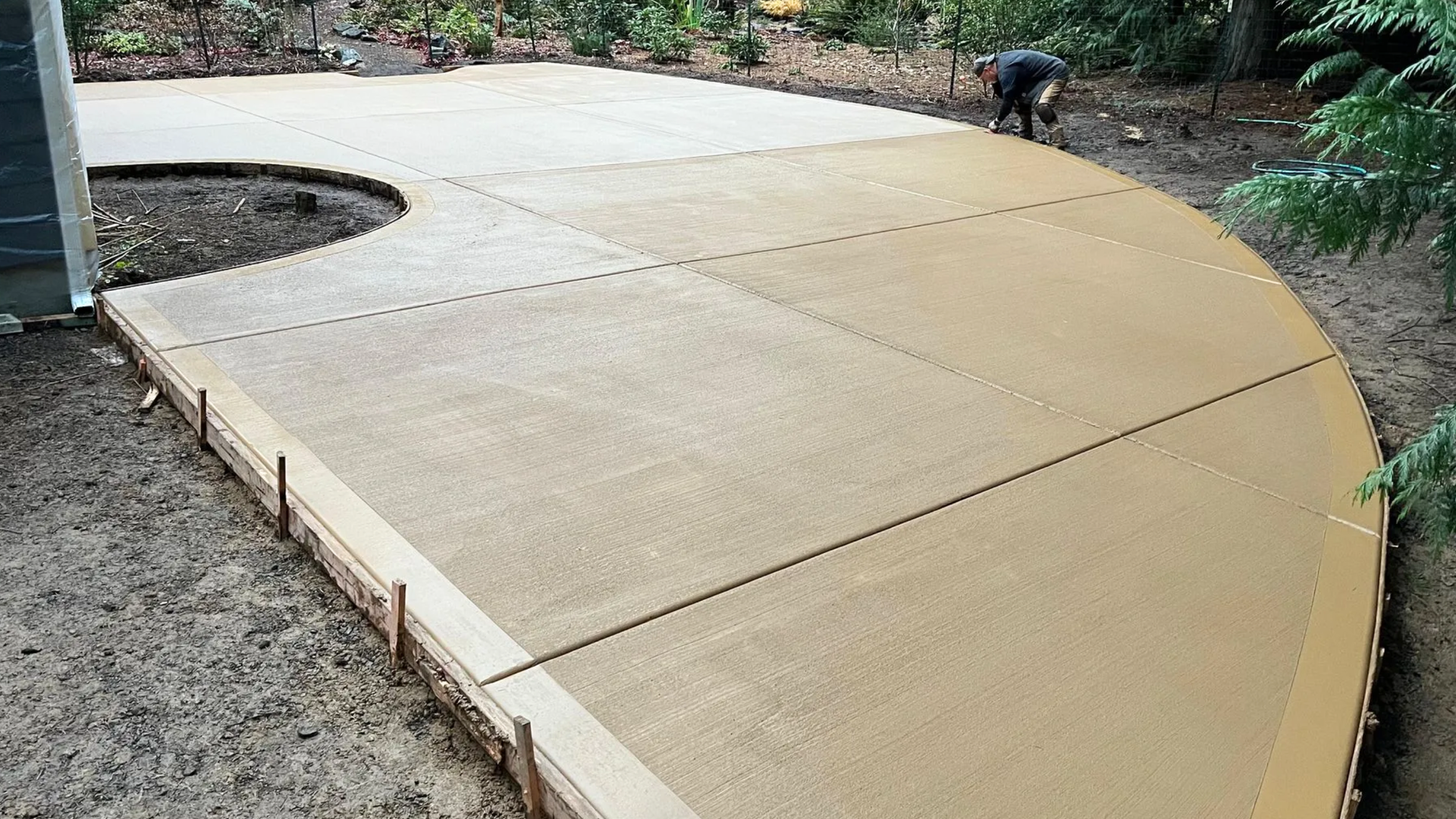
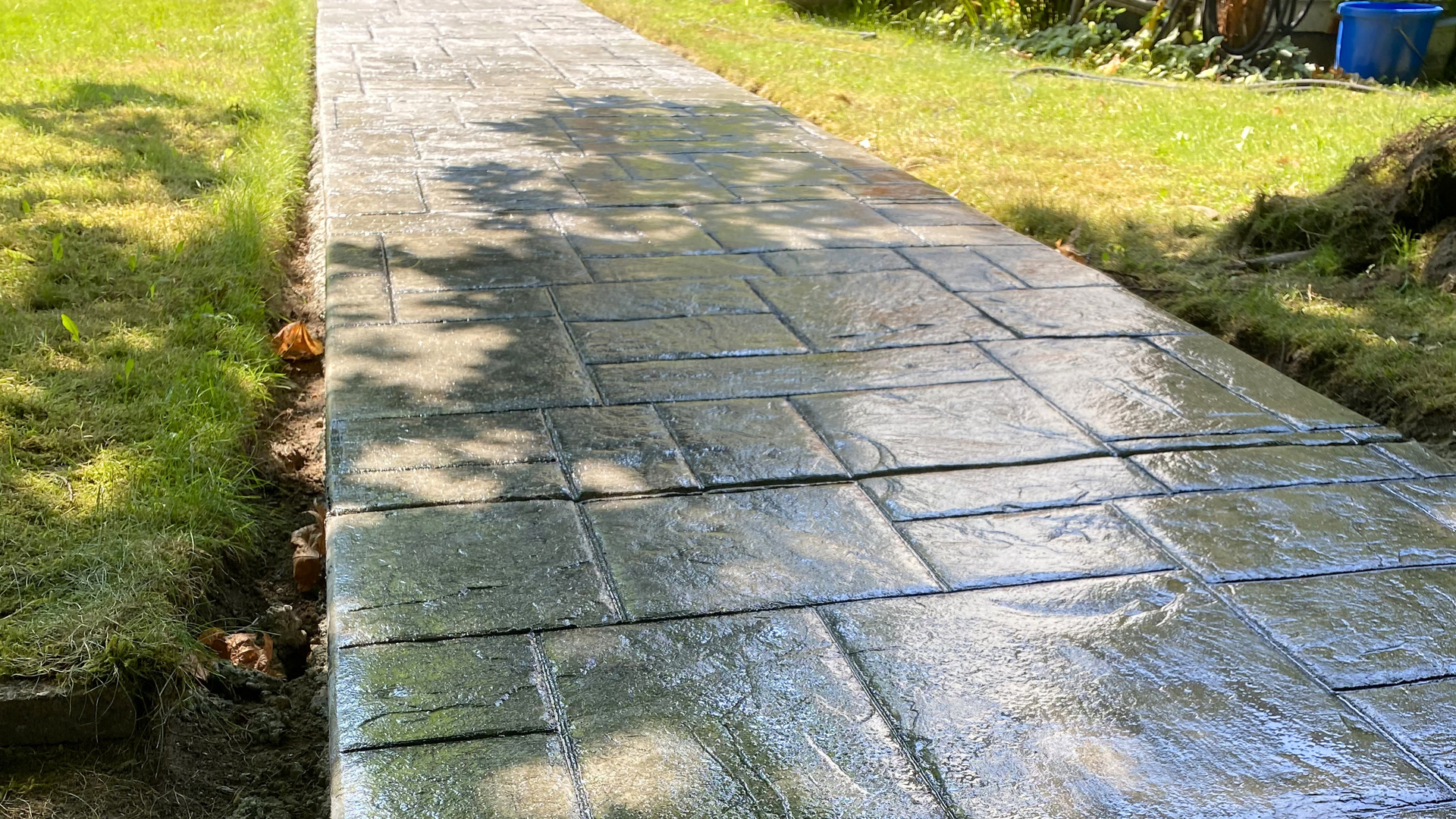
That typically includes a ground-level driveway on its own parcel, a standard walkway or path, and an uncovered patio under a certain size. If your project is a simple slab sitting on prepared ground, well away from any stream, wetland, or shoreline, there is a good chance you are in the clear as far as a building permit goes.
Two cautions, though. First, "no building permit" does not mean "no rules." Even exempt projects still have to follow zoning setbacks, drainage requirements, and other county regulations. Second, the exemptions have limits baked into them, and those limits are exactly where projects trip up. Which brings us to the part that actually needs your attention.
When a Concrete Permit Is Required in Silverdale
A concrete project crosses into permit-required territory when it hits one of a few specific triggers. Any single one of these can require county review, even if the rest of the project looks routine.
Retaining Walls Over Four Feet
Retaining walls are one of the most common permit triggers in concrete work. Kitsap County requires a permit for a retaining wall that stands over four feet high, measured from the bottom of the footing to the top of the wall. An upland wall four feet or shorter that is not holding back anything heavy usually does not need one.
The height is not the only factor, though. A wall of any height needs a permit if it supports a surcharge, meaning an extra load pressing on it, such as a driveway, a road, a building, or a tank. So a short wall that happens to hold up the edge of your new driveway can still require approval. On a shoreline property, any retaining wall needs a permit regardless of height.
Work in a Critical Area or Shoreline Buffer
This is the trigger that catches people off guard, because it overrides the usual size and height exemptions. If your concrete work falls within a critical area, a shoreline buffer, or their setbacks, a permit is required for any structure or new impervious surface of any size. That includes patios and slabs that would normally be exempt, even ones under 18 inches high.
Critical areas include things like wetlands, streams, steep slopes, and fish and wildlife habitat, and Kitsap County has plenty of parcels near them. If your property backs onto a creek, a ravine, or Puget Sound frontage, do not assume a small pour is automatically exempt. This is a case where checking first is genuinely important, and where a contractor familiar with local parcels earns their keep.
Hard Surface and Stormwater Thresholds
Concrete is an impervious surface, meaning water runs off it rather than soaking in, and Kitsap County cares a great deal about where that water goes. Adding enough hard surface to a property can trigger stormwater review even when no building permit is otherwise required.
For uncovered patios, the county's general guidance is that they typically do not require a permit under 2,000 square feet, but it specifically advises contacting Development Engineering to discuss hard-surface limits, catch basins, and other elements that can trigger permitting. Larger projects, or several projects that add up, can push you over a threshold and into a Site Development Activity Permit. Completing the county's Stormwater Worksheet is the standard way to find out how much drainage review your project needs.
Raised Slabs, Driveways, and Road Approaches
Height matters for flatwork too. An uncovered driveway, sidewalk, or platform needs a permit if it sits more than 30 inches above grade at any point, or if it is built over a basement or a story below. On shoreline properties that threshold drops to 18 inches.
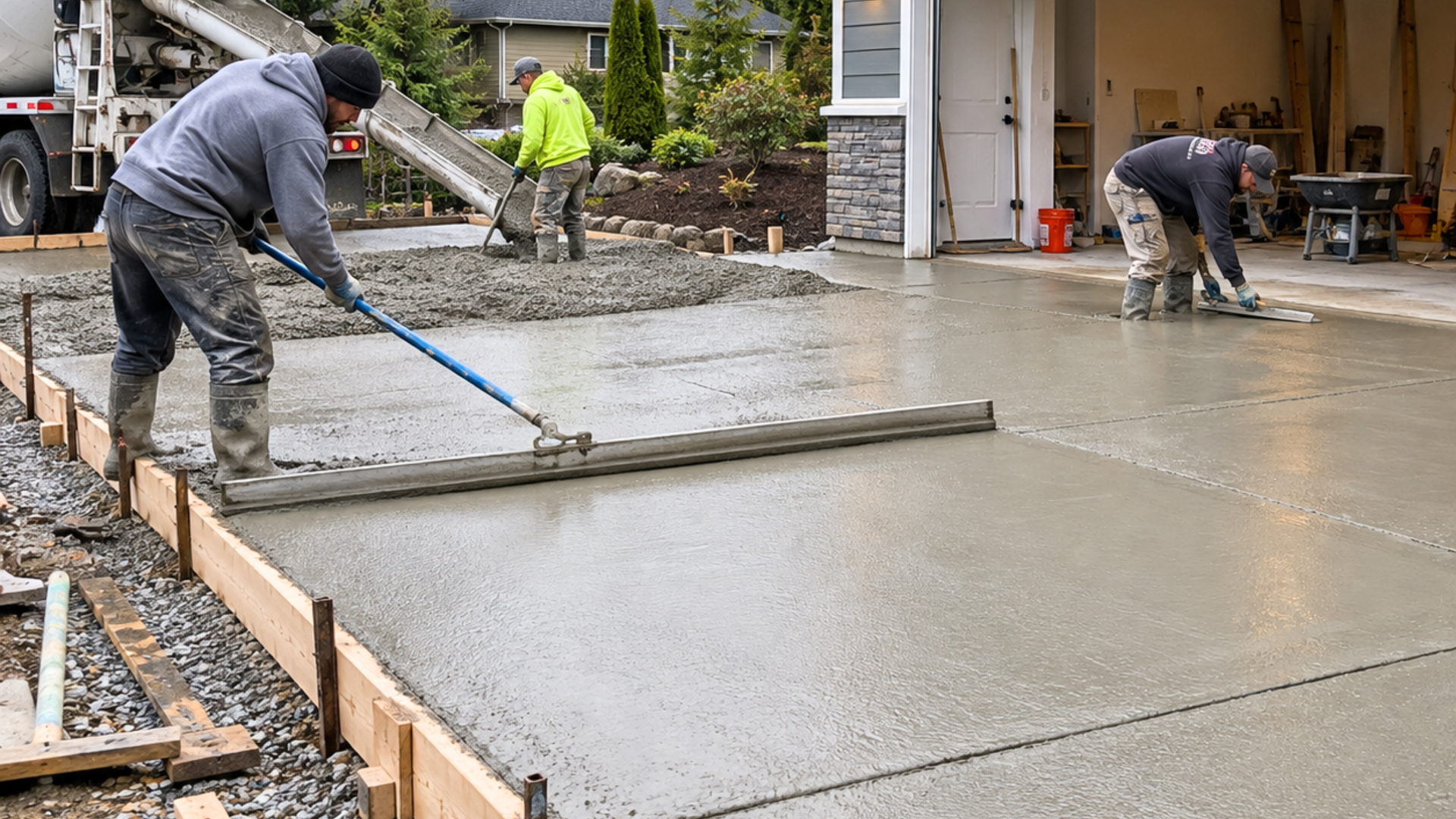
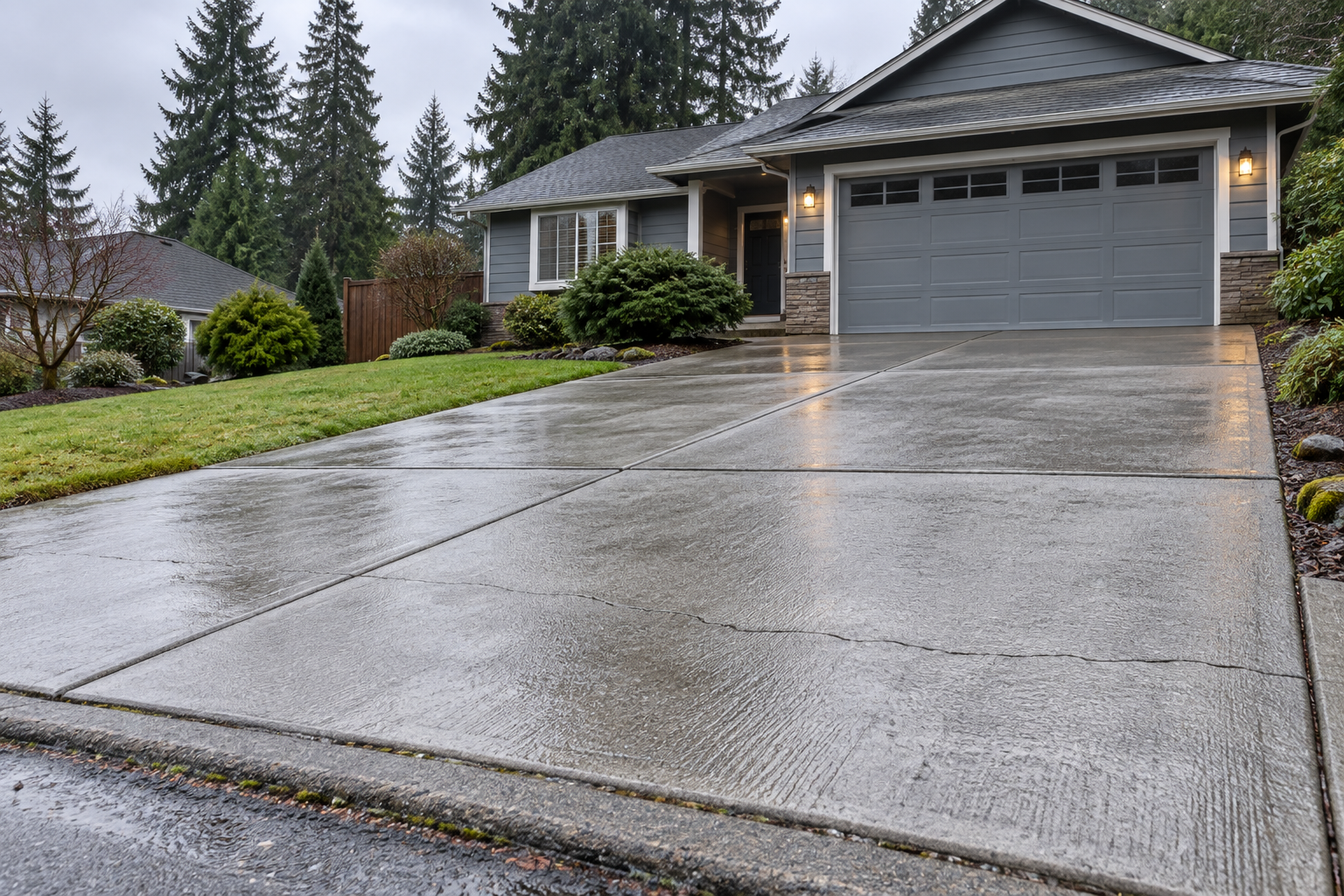
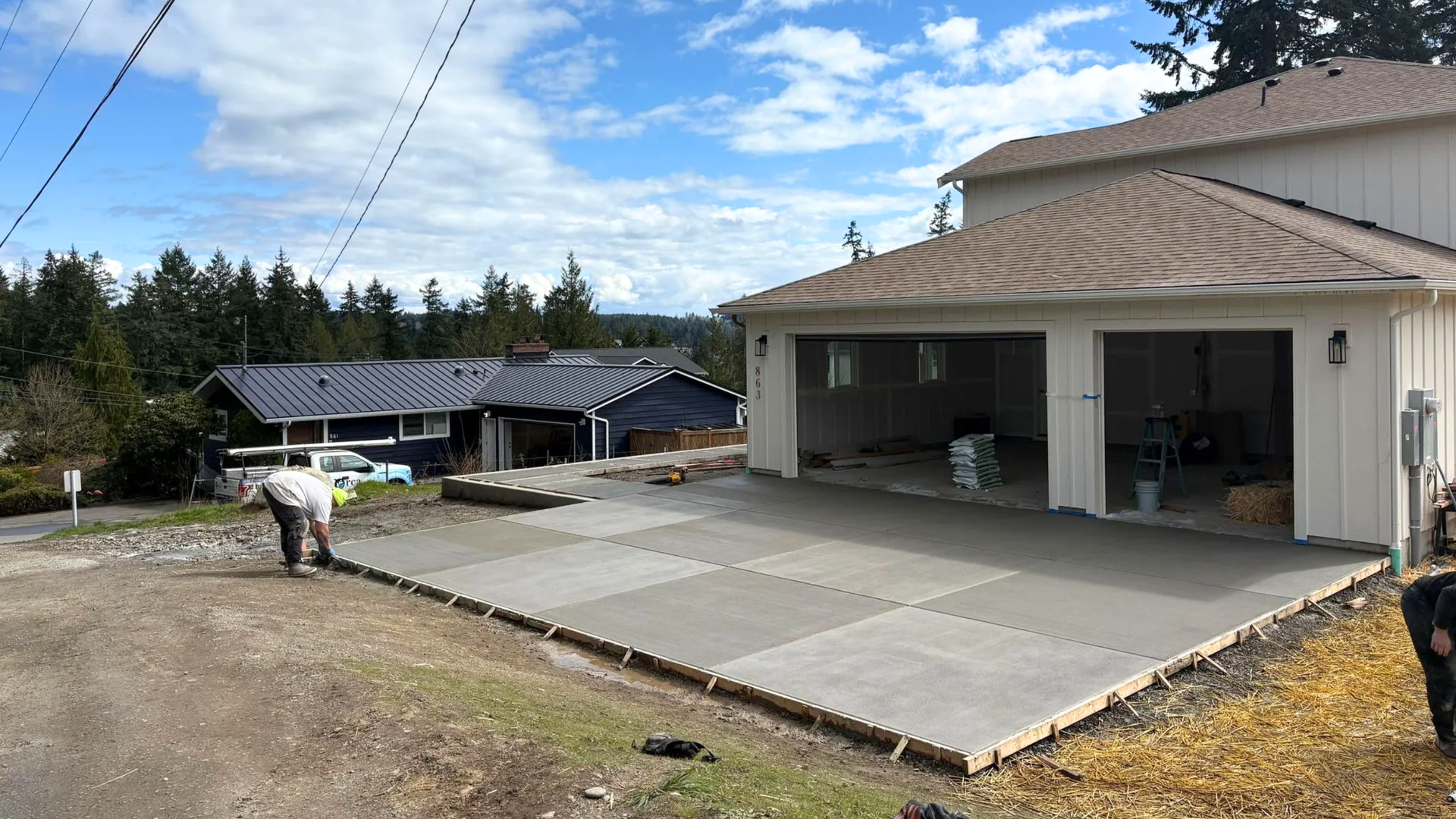
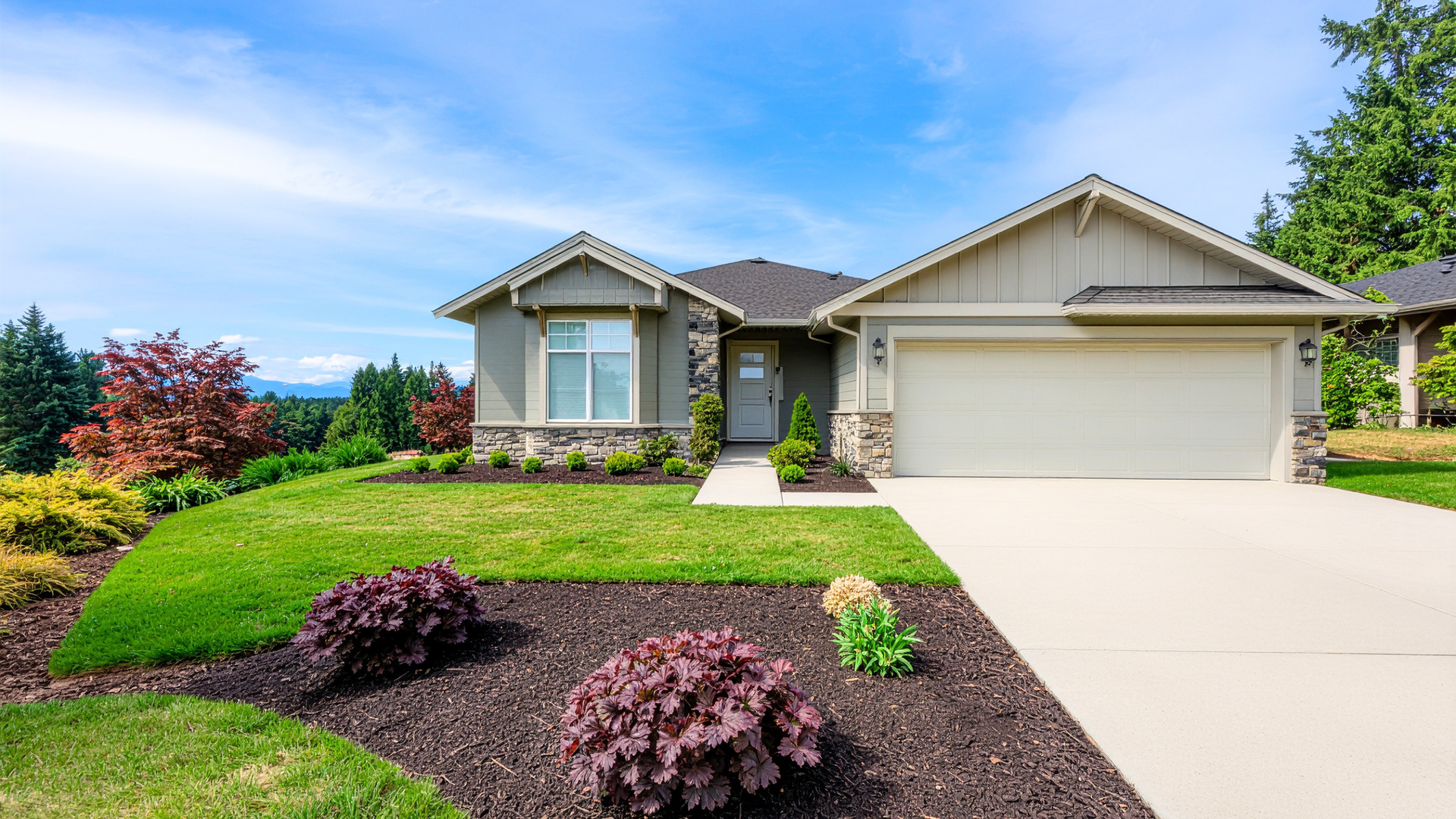
Driveways carry an extra wrinkle. While the slab itself may be exempt, connecting a new or significantly modified driveway to a public road requires a Road Approach Permit, because that connection touches the public right of way. The portion of the driveway on your own property is a Driveway Permit, usually handled as part of a building permit when one is involved. If you are planning concrete driveway installation and repair that ties into the road, this is a step worth planning for early.
A Quick Reference for Common Projects
Every parcel is different, so treat this as a starting point rather than a final ruling. When in doubt, confirm with DCD or your contractor.
| Project | General Permit Outlook in Kitsap County |
|---|---|
| At-grade driveway slab (ordinary lot) | Often no building permit if at grade and clear of critical areas. |
| New driveway connecting to a public road | Road Approach Permit required for the right-of-way connection. |
| Standard walkway or path | Typically no permit if at grade and not in a sensitive area. |
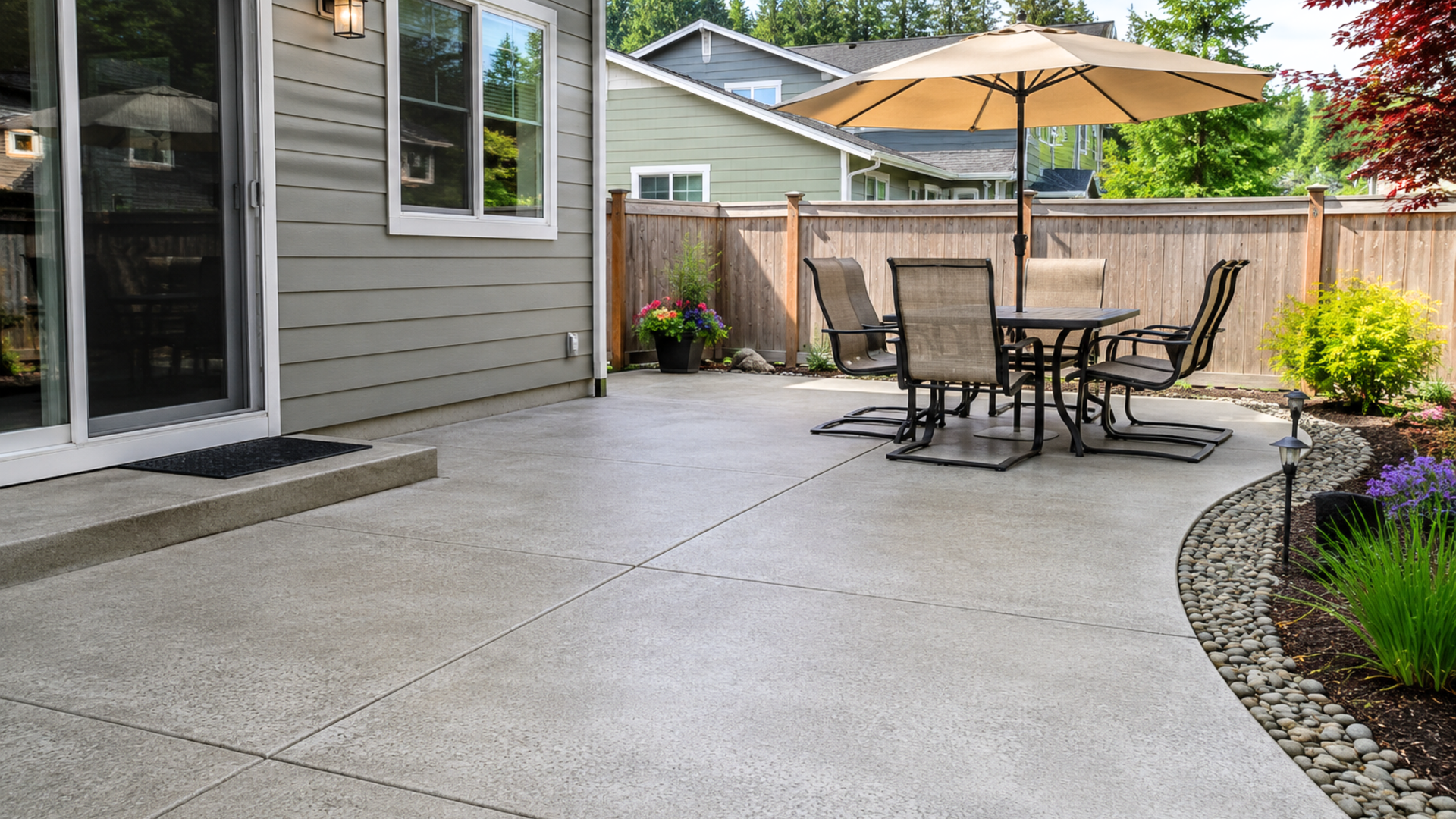
| Uncovered patio | Usually no permit under 2,000 sq ft, but check stormwater and hard-surface limits. |
| Any slab or patio in a critical area or shoreline | Permit required at any size, including under 18 inches high. |
| Retaining wall over 4 ft, or supporting a surcharge | Permit required. Also required at any height if it supports a driveway, road, or building. |
| Raised slab or driveway above grade | Permit required if more than 30 inches above grade, or over a basement or story below. |
Why Concrete Work Permits Matter More Than They Seem
It is tempting to view permits as red tape, especially for a project that feels straightforward. But they exist for reasons that protect you as much as the county. Permits confirm the work meets code, sits within your setbacks, and handles drainage properly, which matters a lot in a wet climate where poorly managed runoff can damage your property or a neighbor's.
There is also a practical cost to skipping a required permit. Unpermitted work can bring stop-work orders and fines, and in some cases you may be told to tear out and redo what you built. It can resurface years later when you sell the home, since unpermitted improvements often come up during inspection and can stall a sale. Compared to those headaches, confirming requirements at the start is cheap insurance. It is also worth folding any permit and review costs into your project budget from the beginning, alongside the pour itself. Our guide to concrete driveway cost per square foot in Washington can help you frame the bigger picture.
How a Silverdale Concrete Contractor Helps
Here is where the "it depends" answer becomes a lot less stressful. A concrete contractor who works in Kitsap County regularly already knows these triggers and can spot them on your specific property before a shovel moves. That is the real value of hiring local. Instead of you decoding county code, an experienced crew reads your lot, flags what applies, and helps coordinate any permits your project needs.
A good contractor also builds permitting into the project timeline rather than treating it as an afterthought, so approvals do not become a surprise delay. If you want a sense of how the full process fits together, from planning through the pour, our overview of the concrete driveway installation process in Silverdale WA shows where permitting lands in the sequence. For a patio project, the same principle applies, and our concrete patios and designs work always starts with getting the groundwork and approvals right.
Frequently Asked Questions
Do you need a permit for concrete work in Silverdale, WA?
It depends on the project. Many at-grade residential jobs, like a ground-level driveway or walkway, do not need a building permit from Kitsap County. Permits are triggered by specifics such as retaining walls over four feet, work in a critical area or shoreline buffer, and hard-surface or stormwater thresholds. Silverdale's rules are set by Kitsap County DCD.
Does a concrete driveway need a permit in Kitsap County?
The slab itself, if it stays at grade, often does not need a DCD building permit. But connecting a new or significantly modified driveway to a public road requires a Road Approach Permit, and new access can trigger stormwater review, so confirm with the county first.
Do I need a permit for a concrete patio in Silverdale?
An uncovered patio typically does not require a permit under 2,000 square feet, but the county advises checking hard-surface and stormwater limits. In a critical area or shoreline buffer, a permit is required at any size.
When does a retaining wall need a permit in Kitsap County?
If it is over four feet high measured from the bottom of the footing to the top, if it is on a shoreline property, or if it supports a surcharge such as a driveway or building. Shorter upland walls that carry no surcharge generally do not.
What happens if I skip a required permit?
You risk stop-work orders, fines, and being told to remove or redo the work, plus complications when selling the home. Confirming requirements up front is far cheaper than fixing a violation later.
Can my concrete contractor handle the permit?
Yes. An experienced local contractor can identify which permits your project needs and help coordinate with Kitsap County, which is the simplest way to stay compliant and avoid delays.
Plan a Compliant Project With Pacific Roots Concrete
So, do you need a permit for concrete work in Silverdale? Sometimes yes, often no, and the difference comes down to specifics: how high the work sits, how close it is to a critical area or shoreline, how much hard surface it adds, and whether it ties into a public road. The safest move is to confirm before you build, and the easiest way to do that is to work with a contractor who already knows Kitsap County's rules.
That is exactly what we do. We help Silverdale homeowners figure out what their project needs, coordinate the right approvals, and build to code so there are no surprises down the line. Request a free estimate from Pacific Roots Concrete and we will walk through your project, flag anything that needs a permit, and lay out a clear plan to get it done right.