Concrete Driveway Thickness Guide for Silverdale WA Homes
Choosing the right concrete driveway thickness is one of the most important decisions when installing a new driveway. Many homeowners focus on appearance, color, or overall cost, but the structural thickness of the slab plays a major role in how well a driveway performs over time.
In Silverdale, where rainfall is frequent and soil conditions can vary across properties, driveway thickness must be planned carefully. A slab that is too thin may crack or settle prematurely, while a properly designed and installed driveway can perform reliably for decades.
This guide explains how driveway thickness works, what factors influence the correct thickness for residential homes, and what Silverdale homeowners should expect when planning a new concrete driveway.
Why Concrete Driveway Thickness Matters
Concrete driveways carry vehicle weight every day. Cars, SUVs, and occasional service vehicles apply pressure across the slab. If the concrete is not thick enough or the base underneath is poorly prepared, the driveway may crack, shift, or deteriorate earlier than expected.
Thickness affects several performance factors, including:
- Structural strength
- Resistance to cracking
- Load-bearing capacity
- Long-term durability
Ability to resist moisture-related movement
Many driveway problems that appear years later can often be traced back to insufficient thickness or weak base preparation during installation.
Standard Concrete Driveway Thickness for Residential Homes
For most residential properties, concrete driveways are installed at a thickness of about four inches. This standard thickness is typically suitable for passenger vehicles when the base beneath the slab is properly prepared and compacted.
However, driveway thickness may increase depending on vehicle weight, soil stability, or expected use.
Typical Concrete Thickness Guidelines
| Driveway Use | Recommended Thickness |
|---|---|
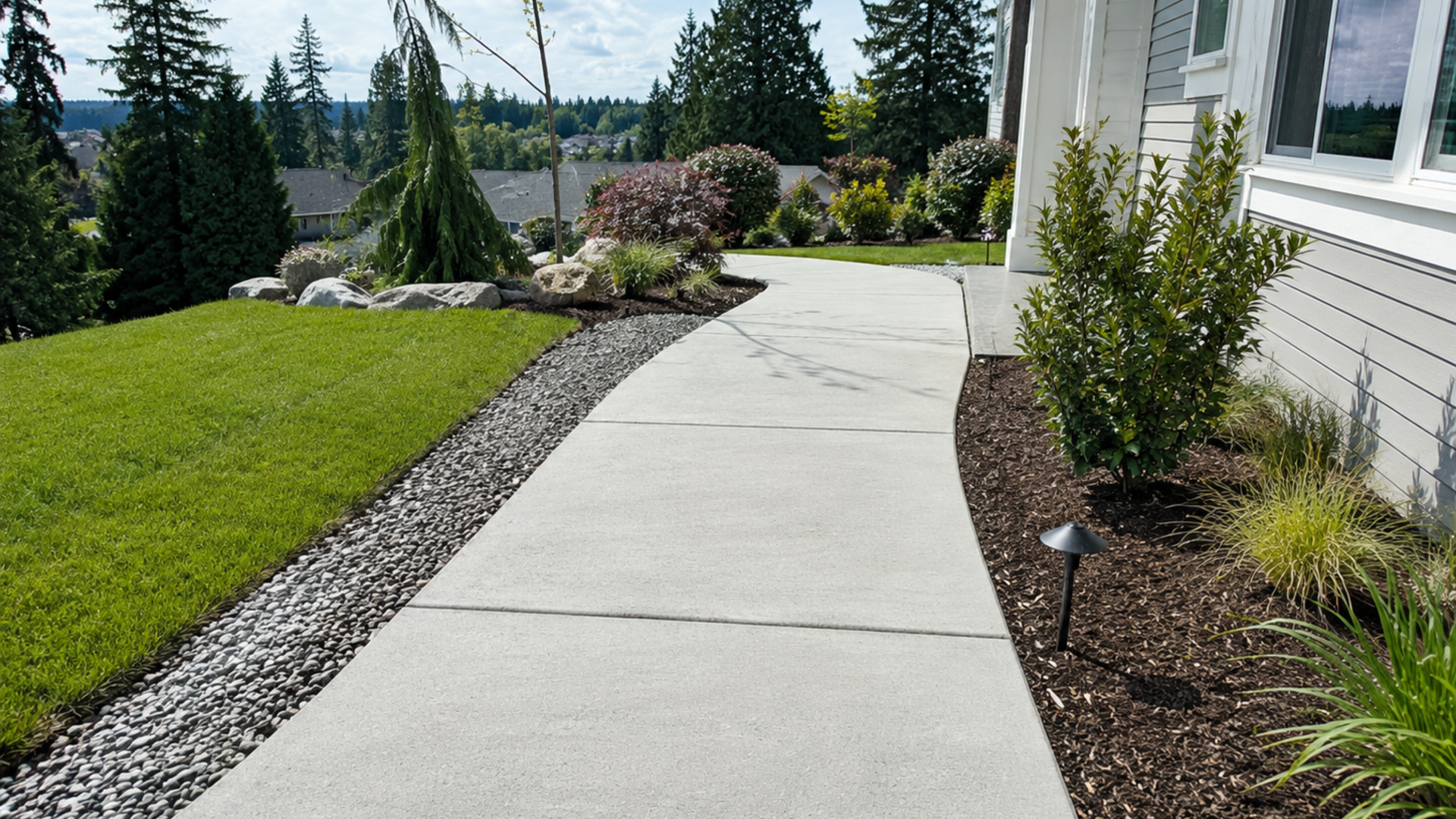
| Walkways and patios | 3–4 inches |
| Standard residential driveways | 4 inches |
| Driveways with heavier vehicles | 5 inches |
| RV or equipment parking areas | 6 inches or more |
These guidelines reflect typical residential conditions. Some properties may require adjustments depending on slope, soil type, and drainage conditions.
The Importance of Proper Base Preparation
Concrete thickness alone does not determine the strength of a driveway. The base beneath the slab is equally important.
A properly installed driveway typically includes a compacted gravel base that supports the concrete evenly across the entire surface. This base distributes weight and prevents uneven settlement.
What a Proper Base Layer Does
A well-prepared base helps:
- Support the slab evenly
- Reduce soil movement beneath the concrete
- Improve drainage under the driveway
- Minimize the risk of cracking caused by shifting ground
Without a stable base, even thicker concrete may experience structural problems over time.
In Silverdale’s damp climate, a gravel base is especially important because moisture can weaken natural soil and cause gradual settlement beneath the slab.
Soil Conditions and Their Impact on Driveway Thickness
Soil conditions vary widely across residential properties. Some areas have stable compacted soil, while others contain clay or loose fill material that shifts when wet.
When soil conditions are less stable, contractors may recommend additional excavation, a deeper base layer, or thicker concrete to improve long-term performance.
Common Soil Conditions That Influence Driveway Design
Homeowners may encounter soil conditions such as:
- Clay soil that expands when saturated with water
- Loose soil from previous construction work
- Poorly compacted fill material
- Areas with frequent moisture buildup
Each of these conditions can influence driveway design and thickness recommendations.
Evaluating soil conditions early helps ensure the driveway is designed correctly for the property.
Reinforcement and Structural Support
Concrete reinforcement improves the strength and reliability of the slab. While reinforcement does not completely eliminate cracks, it helps control cracking and distributes loads more evenly across the driveway.
Two common reinforcement methods include:
- Steel rebar placed within the slab
- Welded wire mesh embedded in the concrete
Reinforcement helps maintain structural stability when small cracks develop, preventing them from widening or spreading across the driveway.
When reinforcement is combined with proper thickness and base preparation, the driveway becomes much more resistant to long-term structural issues.
Load Considerations for Residential Driveways
Vehicle weight and usage patterns influence the thickness required for a driveway.
Many residential driveways primarily support standard passenger vehicles. In those situations, four inches of concrete may be sufficient.
However, some homes experience heavier loads.
Situations Where Thicker Concrete May Be Recommended
A thicker slab may be beneficial when:
- Large pickup trucks or work vehicles are common
- Delivery trucks frequently access the driveway
- RVs or trailers are stored on the property
- The driveway slope creates additional stress on the slab
Increasing thickness during installation can improve durability and reduce the risk of premature cracking.
While thicker concrete requires more material, it often provides greater long-term value.
Drainage and Slope Considerations
Water management is one of the most important factors affecting driveway performance.
If water collects beneath the slab or along the driveway edges, soil can weaken over time. This may cause the driveway to settle unevenly or develop cracks.
Proper driveway design ensures that water flows away from the surface.
Key Drainage Elements in Driveway Design
Effective driveway drainage typically includes:
- A slight slope directing water away from the home
- A gravel base that allows moisture to drain downward
- Strong edges that prevent erosion along the sides
In Silverdale’s rainy climate, these features play an essential role in preserving the structural integrity of the driveway.
Thickness vs Cost: What Homeowners Should Expect
Increasing driveway thickness does increase installation costs slightly because additional concrete and reinforcement may be required.
However, thicker concrete can provide long-term benefits that offset the initial investment.
Example Cost Impact by Thickness
| Thickness | Relative Cost | Durability Benefit |
|---|---|---|
| 4 inches | Standard installation | Suitable for typical residential vehicles |
| 5 inches | Moderate increase | Improved durability for heavier vehicles |
| 6 inches | Higher increase | Designed for heavier loads or RV parking |
Homeowners who expect heavier vehicle use often choose slightly thicker concrete to avoid structural issues later.
For a broader breakdown of driveway pricing considerations, see How Much Does a Concrete Driveway Cost in Silverdale WA.
How Thickness Affects Driveway Lifespan
The lifespan of a concrete driveway depends on multiple factors, including thickness, base preparation, reinforcement, drainage design, and maintenance.
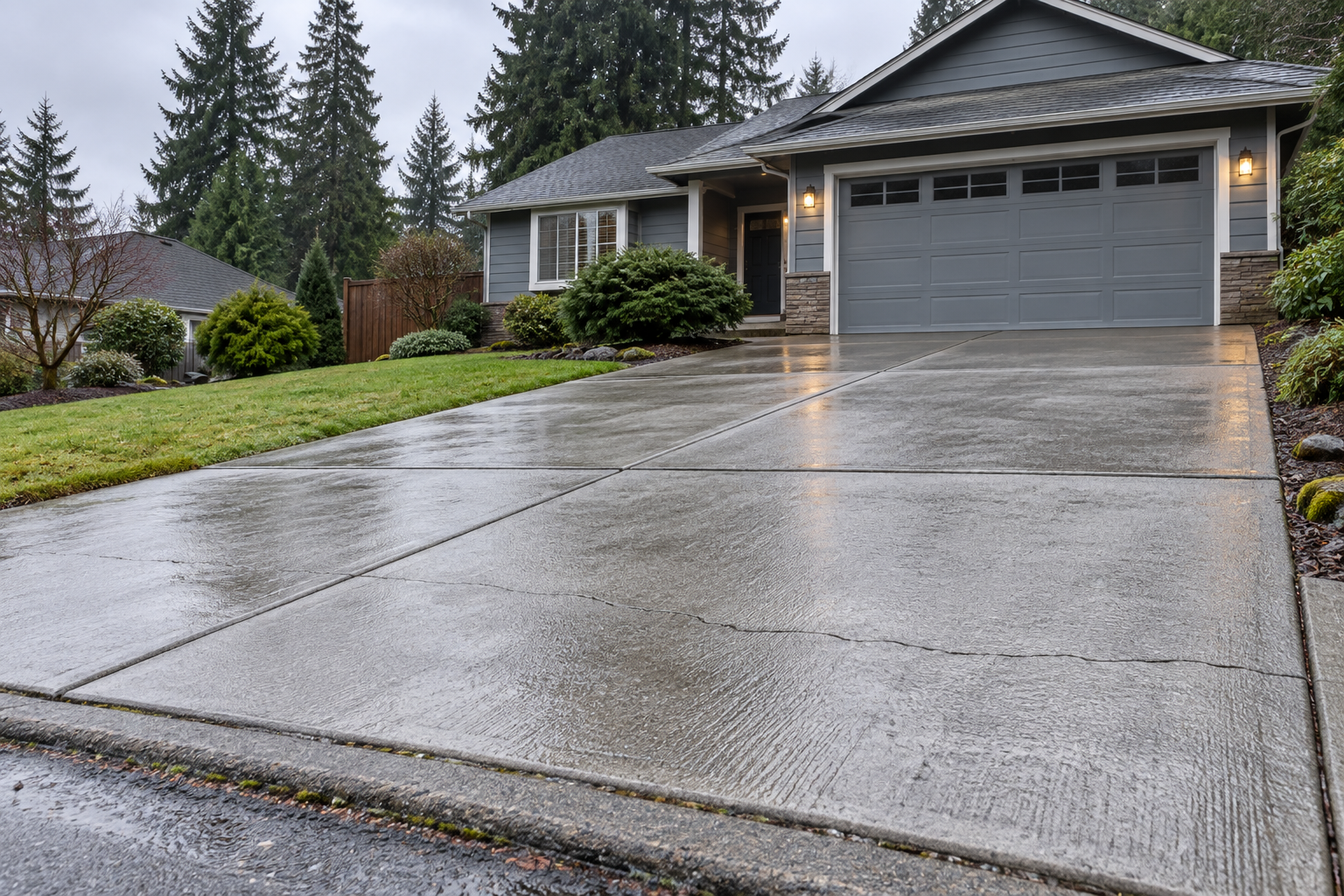
When installed properly, residential concrete driveways can perform reliably for decades.
Homeowners interested in lifespan expectations can review How Long Does a Concrete Driveway Last in Silverdale WA for a detailed explanation of durability factors.
Planning a New Driveway Installation
Before installing a new driveway, homeowners should evaluate several property-specific factors.
These include:
- Vehicle weight and traffic frequency
- Soil stability on the property
- Drainage patterns and water flow
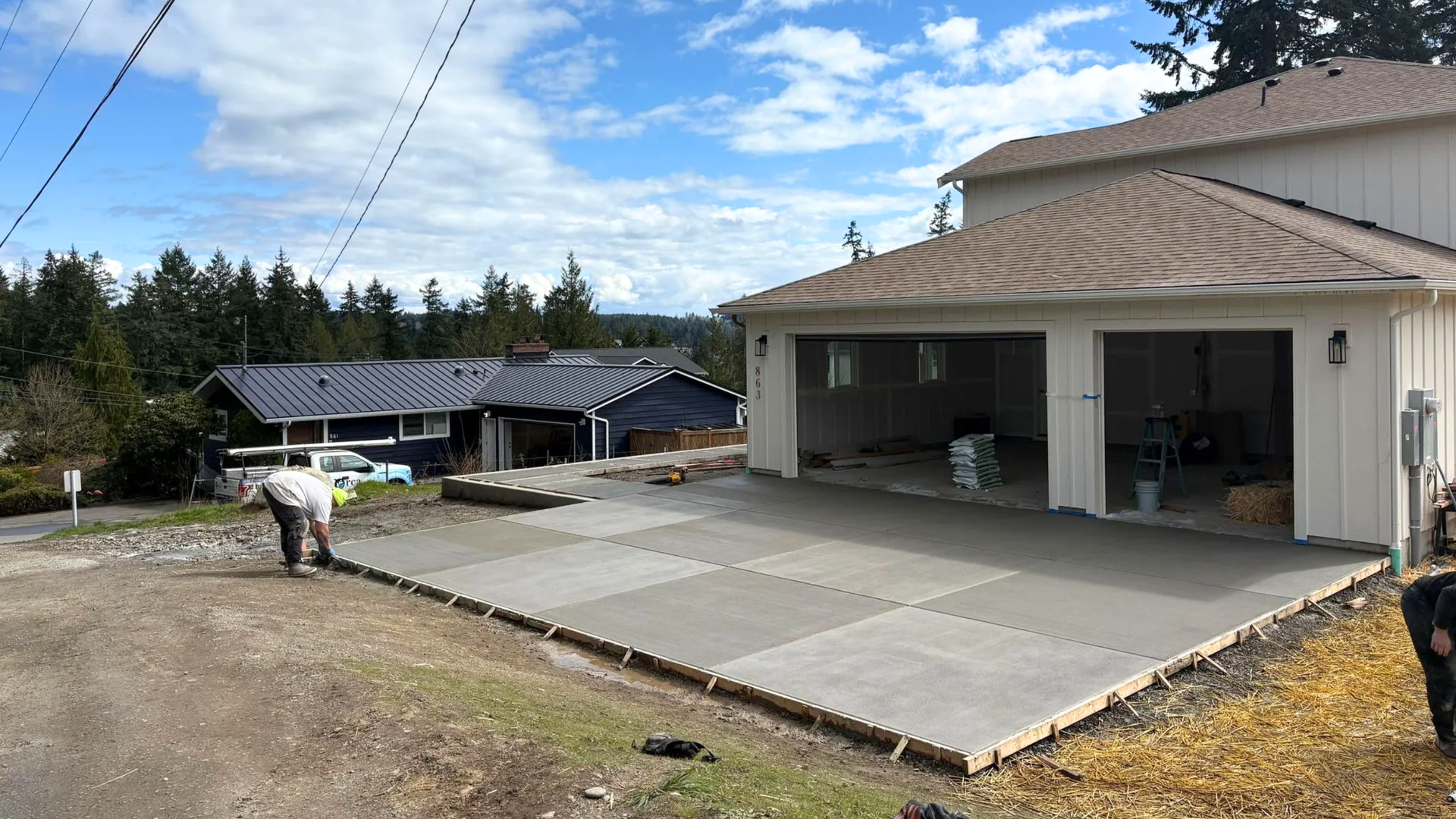
- Available space for excavation and base preparation
A professional evaluation helps determine the appropriate thickness and installation approach for the property.
Taking time to plan these details before construction begins helps prevent structural problems later.
Why Professional Installation Matters
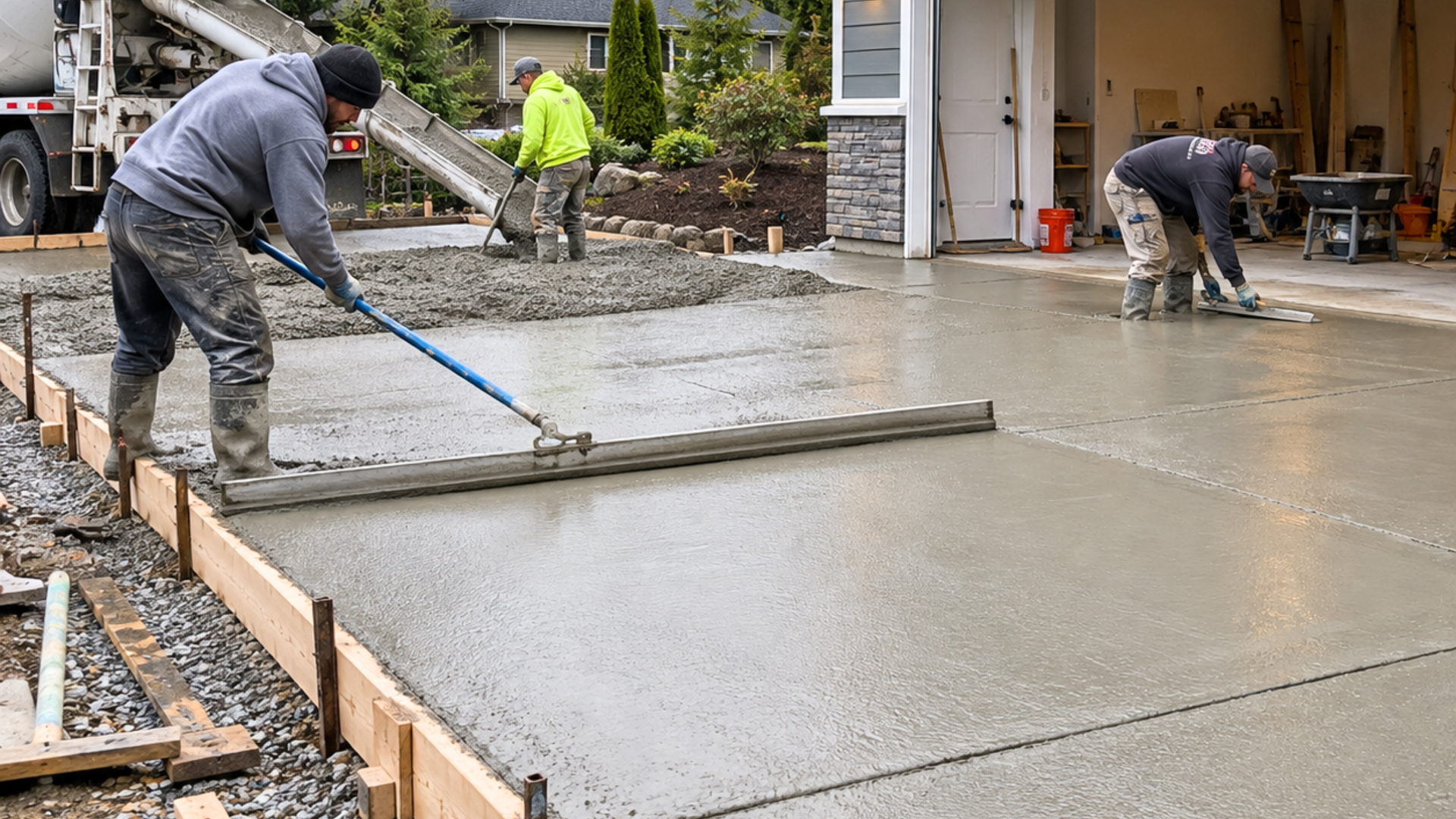
Concrete driveway installation involves much more than pouring concrete into a form. Proper excavation, reinforcement placement, and finishing techniques all contribute to long-term performance.
Experienced contractors evaluate each property individually rather than applying a single standard design.
Professional installation helps ensure:
- Proper base compaction
- Correct reinforcement placement
- Consistent concrete thickness
- Effective drainage design
These steps significantly reduce the likelihood of premature cracking or settlement.
Why Homeowners Work With Pacific Roots Concrete
Pacific Roots Concrete provides residential concrete services throughout Silverdale and surrounding areas. Our team focuses on structural integrity, proper preparation, and installation practices designed for local conditions.
By evaluating soil conditions, drainage patterns, and expected vehicle use, we help homeowners install driveways designed to perform well for many years.
Final Thoughts
Concrete driveway thickness plays a major role in long-term durability. While four inches is the typical standard for residential driveways, conditions such as vehicle weight, soil stability, and drainage may justify thicker concrete.
Homeowners who understand these factors can make better decisions during the planning stage and avoid structural issues later.
A driveway built with the correct thickness, proper reinforcement, and a well-prepared base can provide decades of reliable performance while maintaining the appearance and value of the home.